Photographer Olia Kolendo / Videomaker @LiniaParis
Share
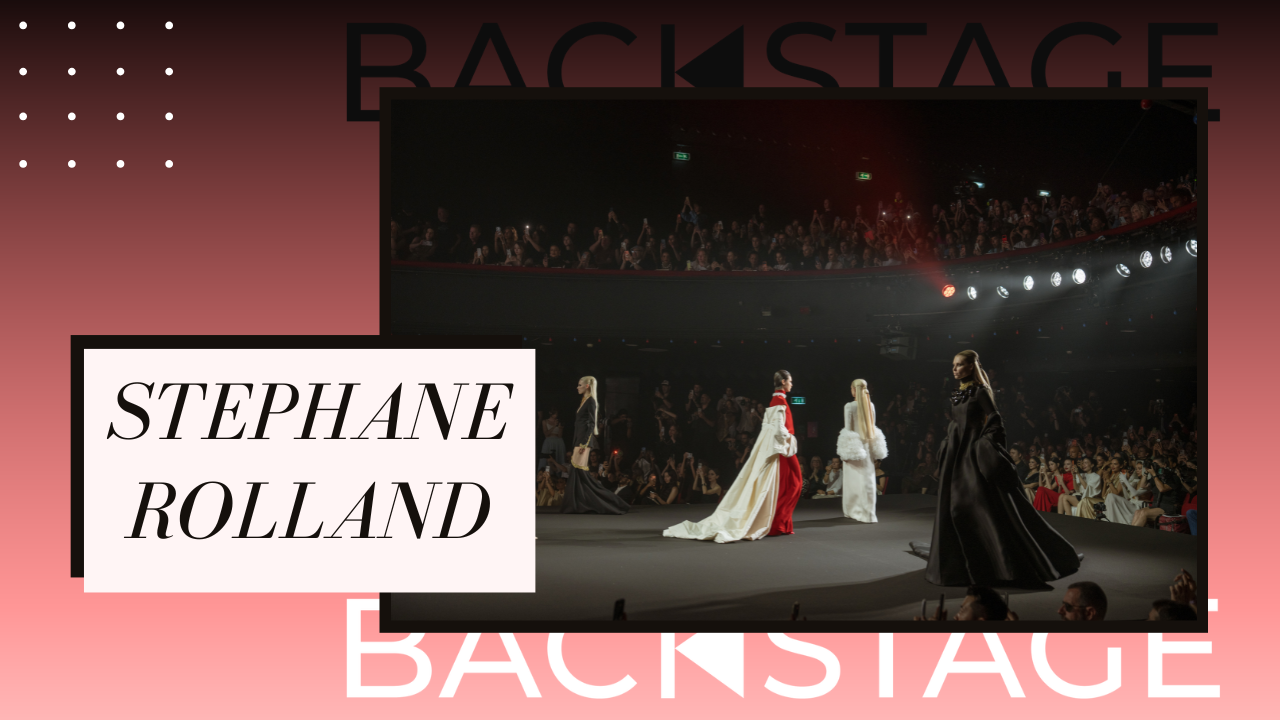
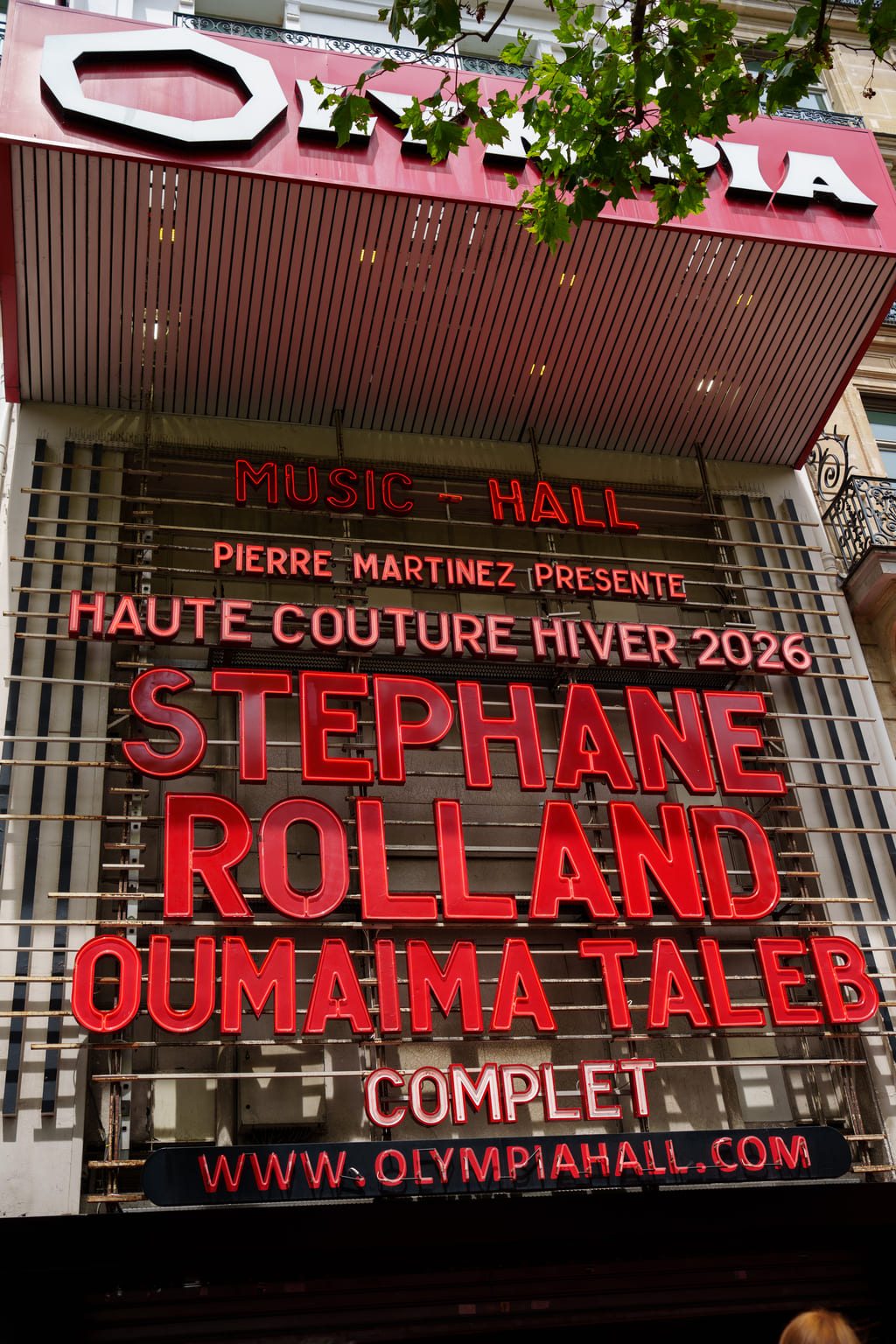
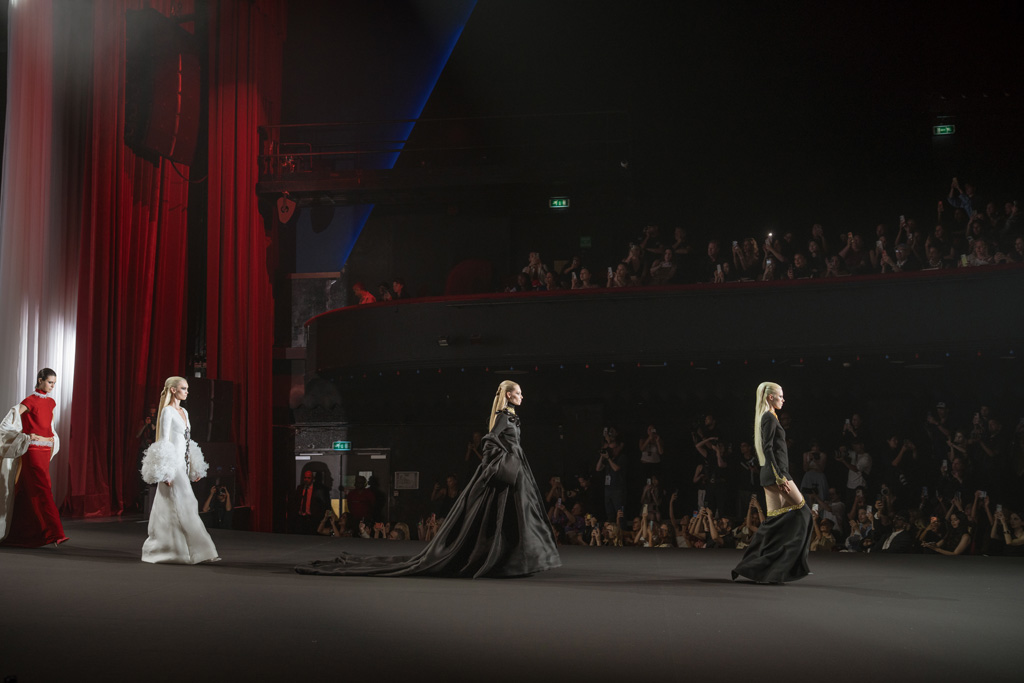
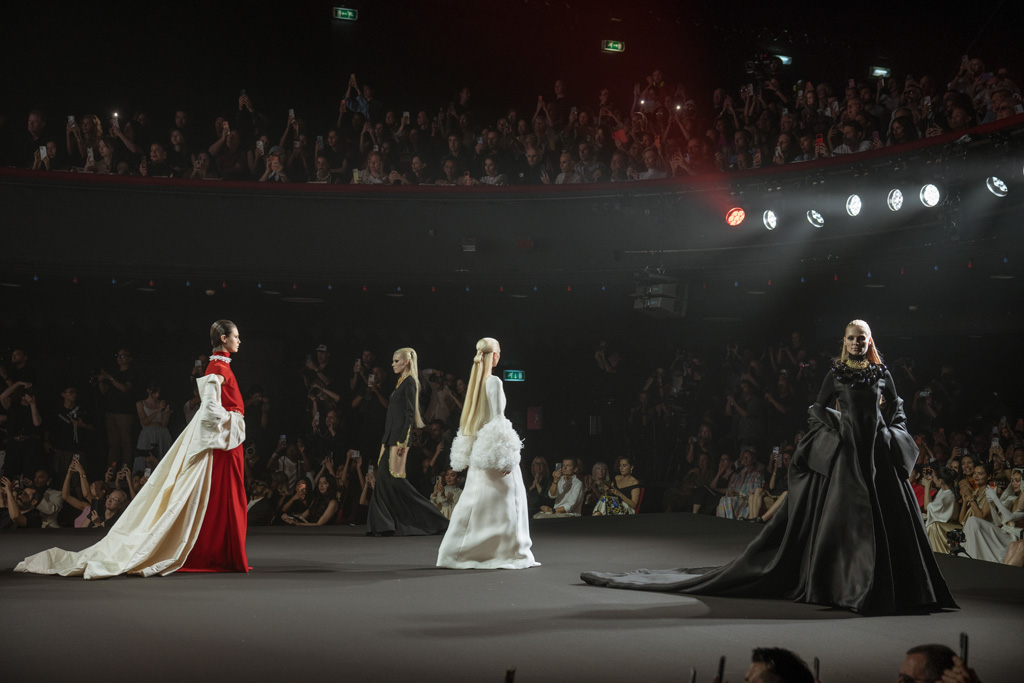
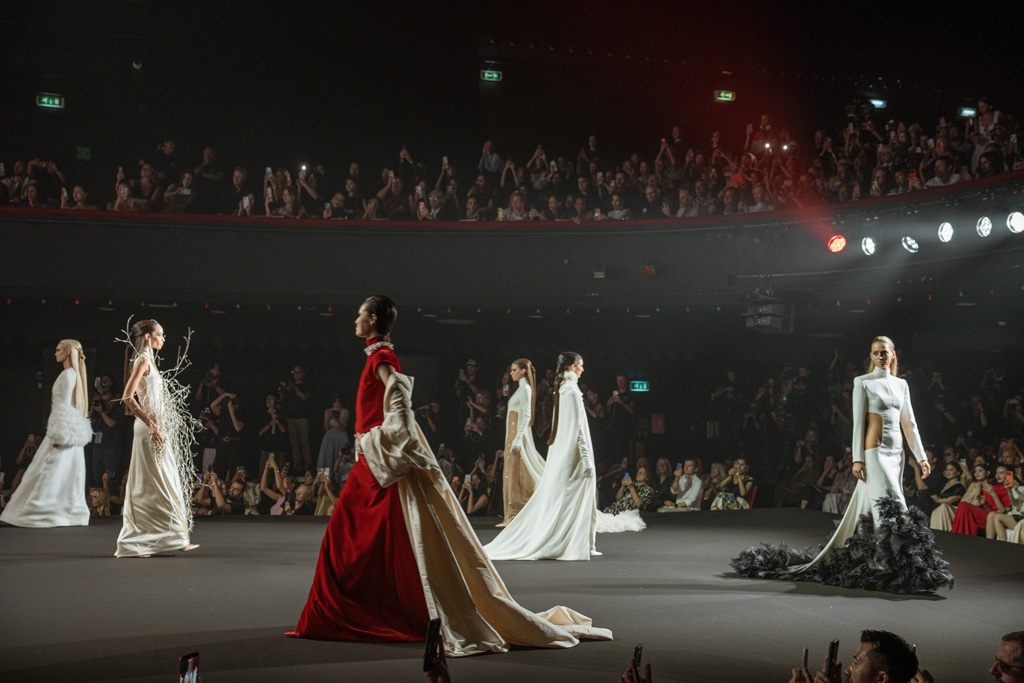
Presented at L’Olympia on July 7, 2026, Stéphane Rolland’s Winter Haute Couture collection transforms the legendary singer’s journey into 33 silhouettes where emotion becomes fabric and memory finds form.
There are places that transcend architecture, venues that become voices, where time does not erase but deposits itself into collective memory. L’Olympia is one of them. And it was here, on a July afternoon, that Stéphane Rolland chose to stage his tribute to Dalida, marking the 40th anniversary of her death and the enduring resonance of her voice.
The choice was far from arbitrary. It was at L’Olympia that Iolanda Cristina Gigliotti became Dalida, where three men, Lucien Morisse, Bruno Coquatrix, and Eddie Barclay, discovered a young, unknown voice and set in motion a career that would transcend borders and generations. Rolland does not approach his subject as an icon frozen in nostalgia, but as a living presence within the contemporary imagination. A woman whose elegance was never artifice, but a way of inhabiting the world. An artist who transformed fragility into strength, melancholy into light, and emotion into a universal language.
Born in Cairo in 1933 to Italian parents, Dalida carried Mediterranean, Eastern, French, and Italian influences into an artistic identity that anticipated cultural diversity before it became a celebrated value. Her story is one of dual belonging, Italian by blood, Egyptian by birth, French by destiny, a complexity Rolland captures not through literal reference, but through the tension between strength and vulnerability that defined her presence.
“She was extremely fragile and strong at the same time,” Stéphane Rolland explained, adding that all the show’s elements were chosen to channel her sensitivity. “Life sometimes is just suspended with a thread.”
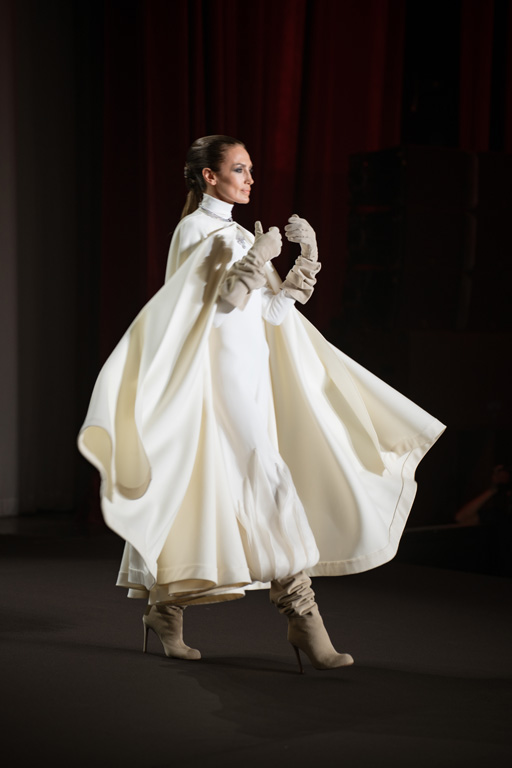
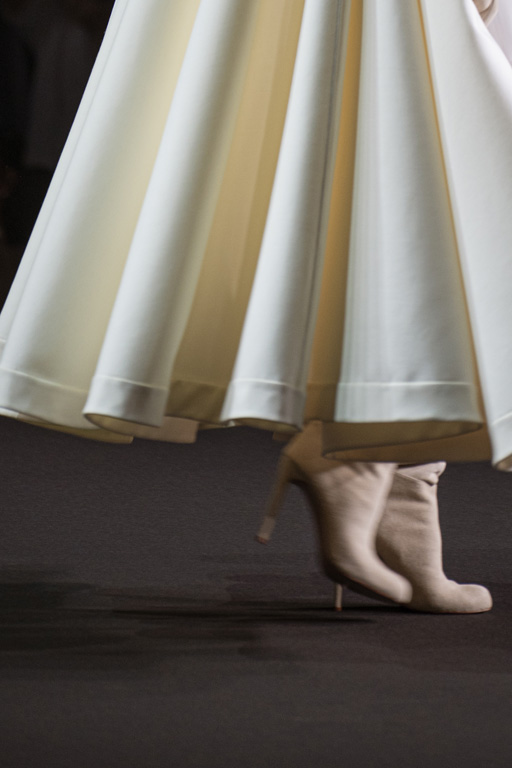
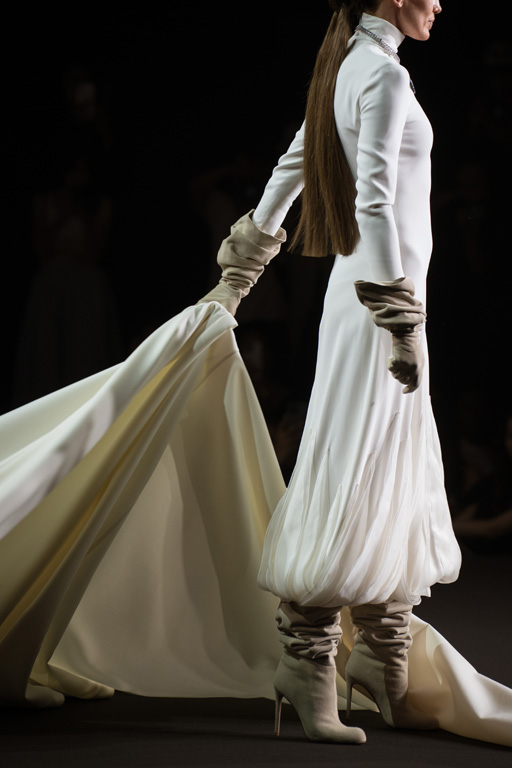
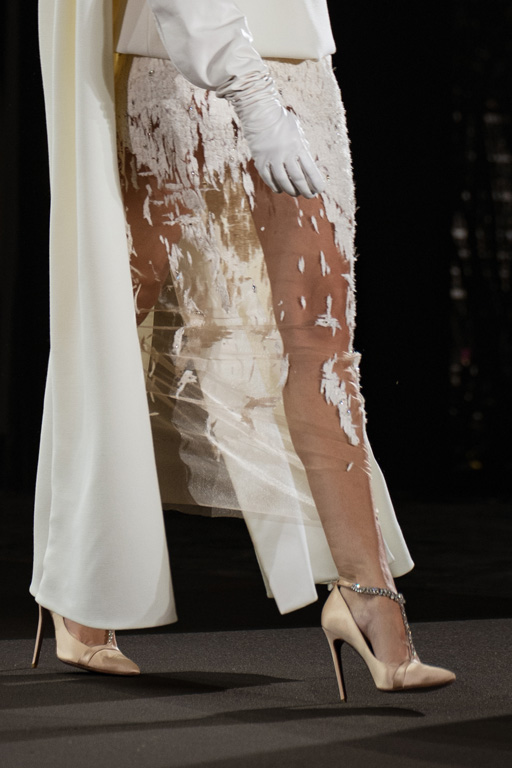
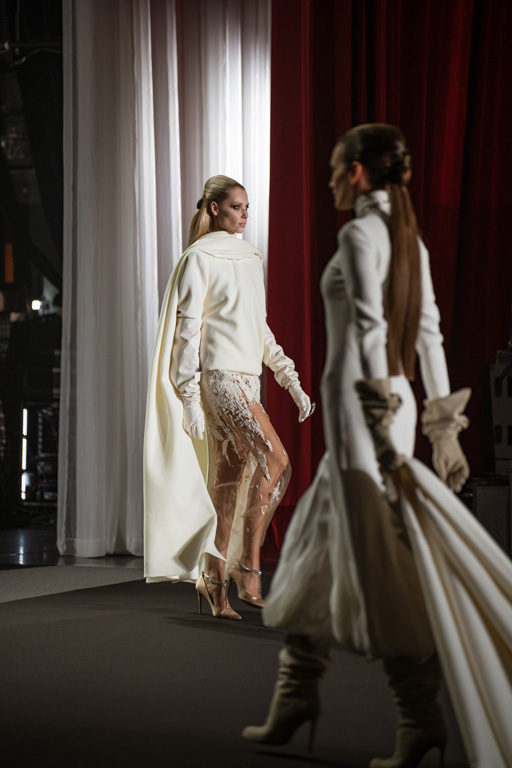
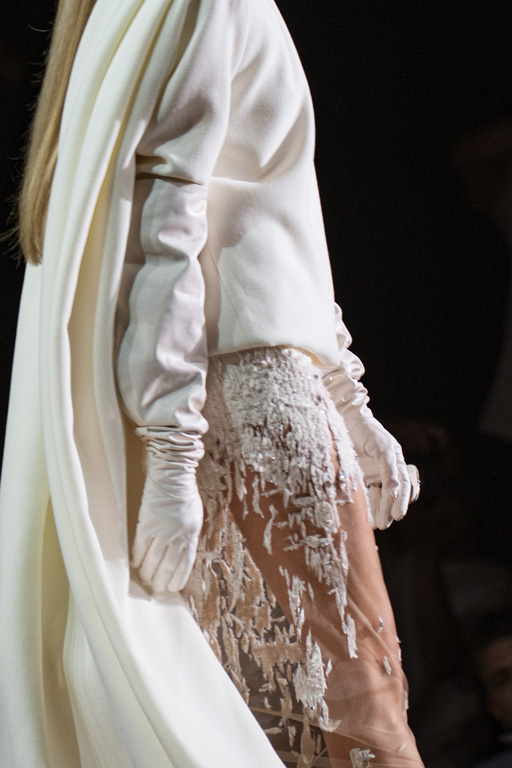
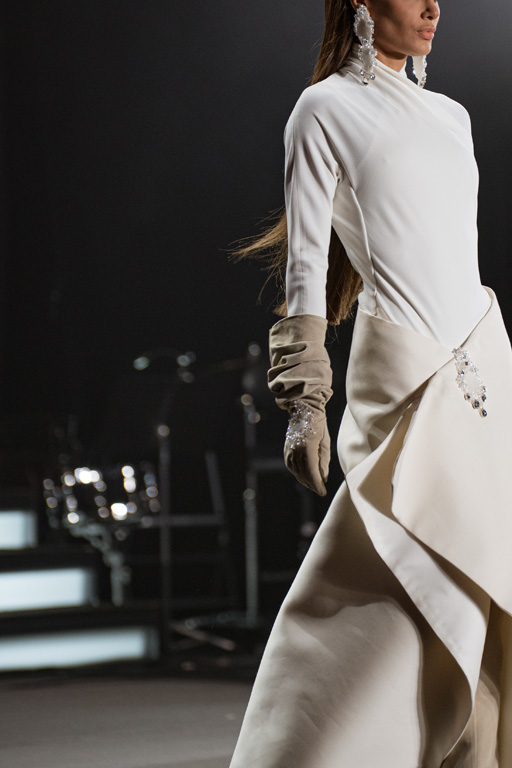
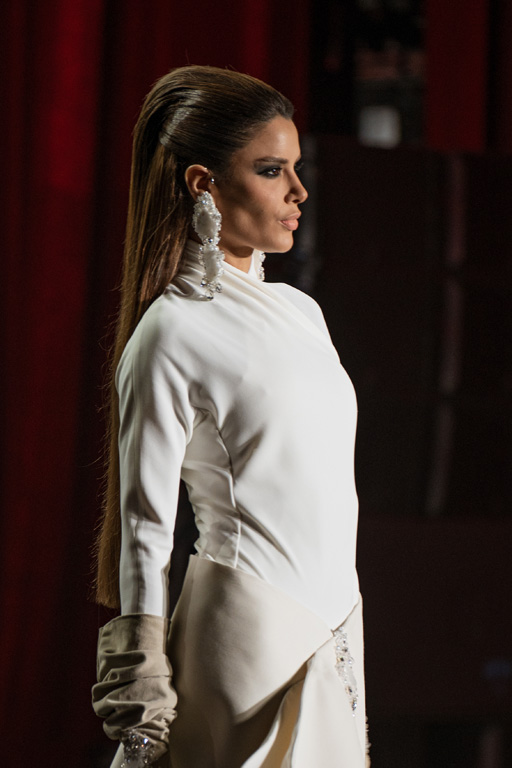
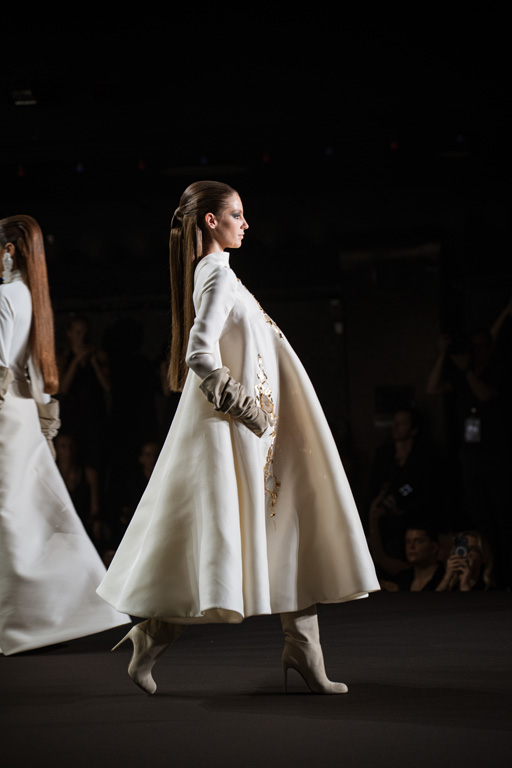
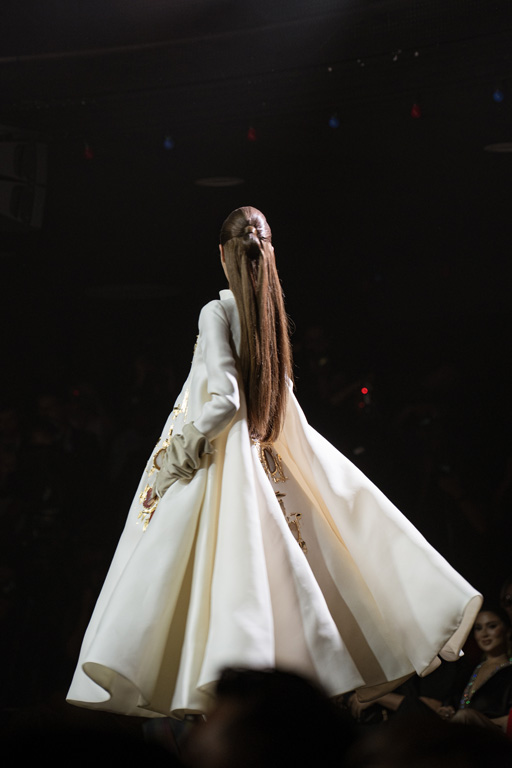
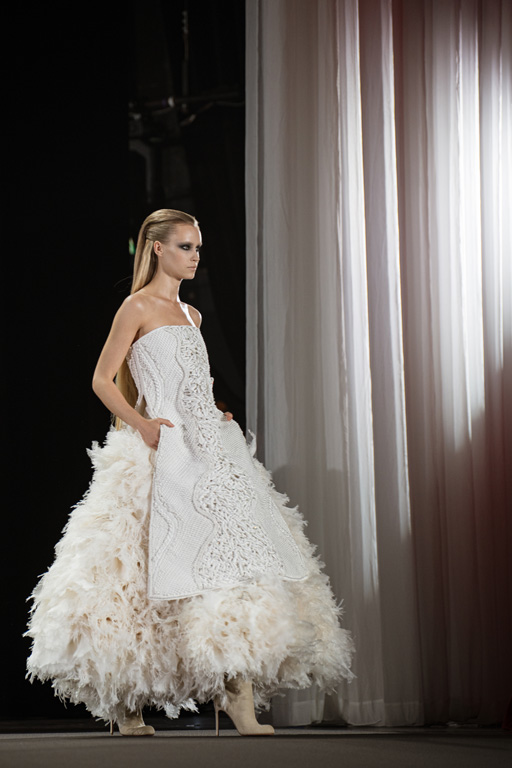
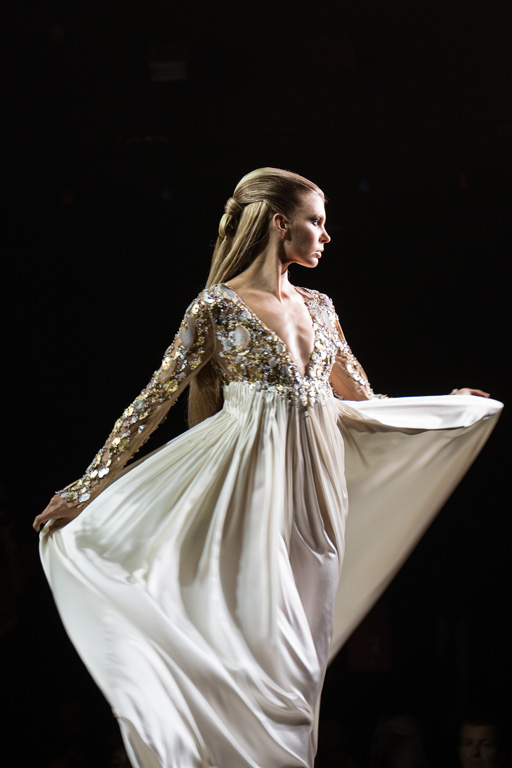
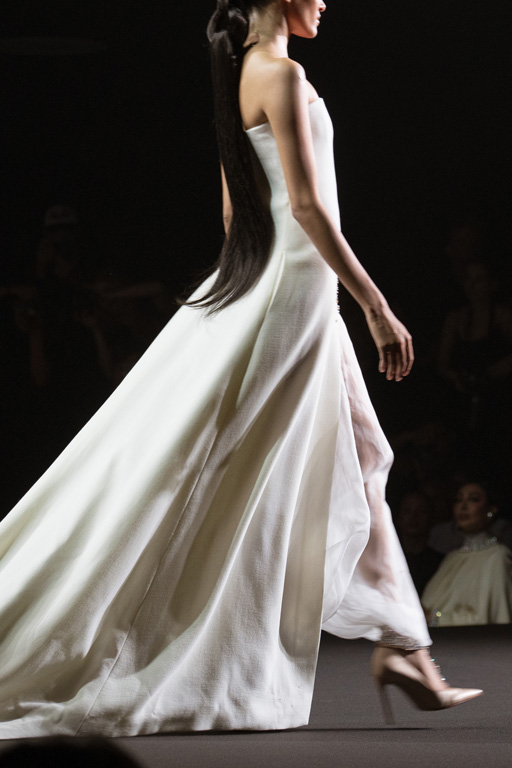
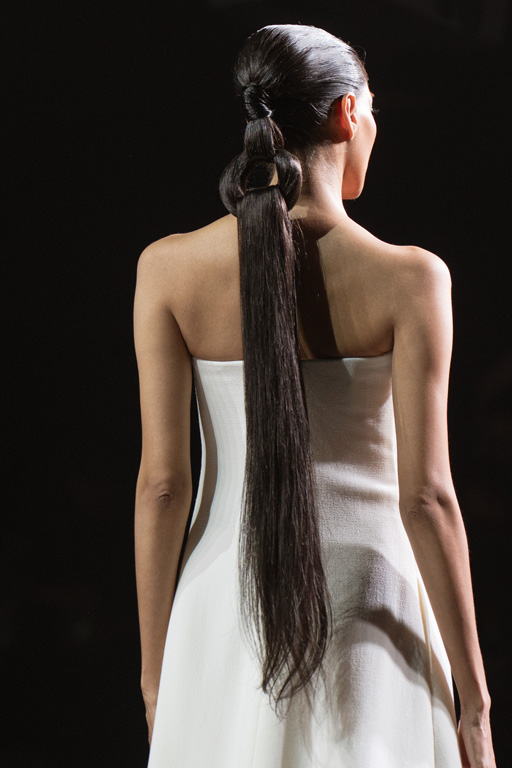
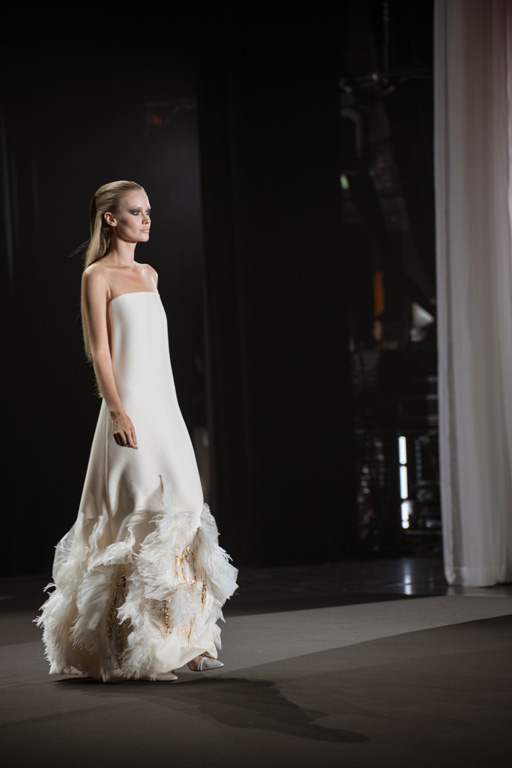
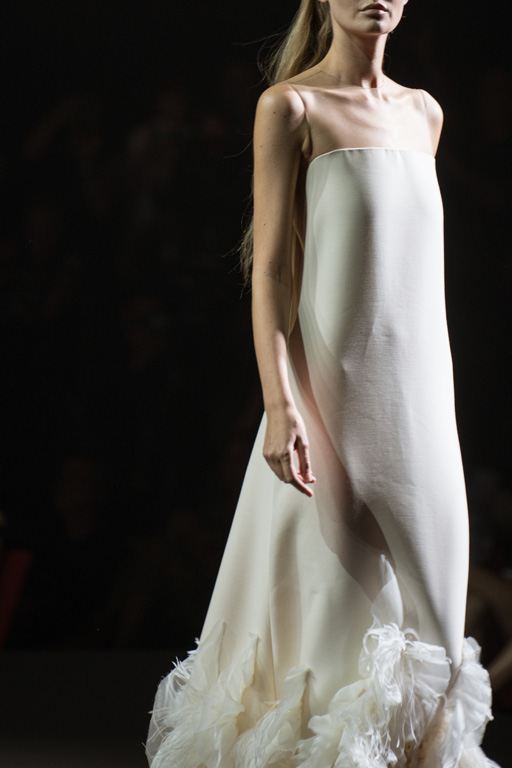
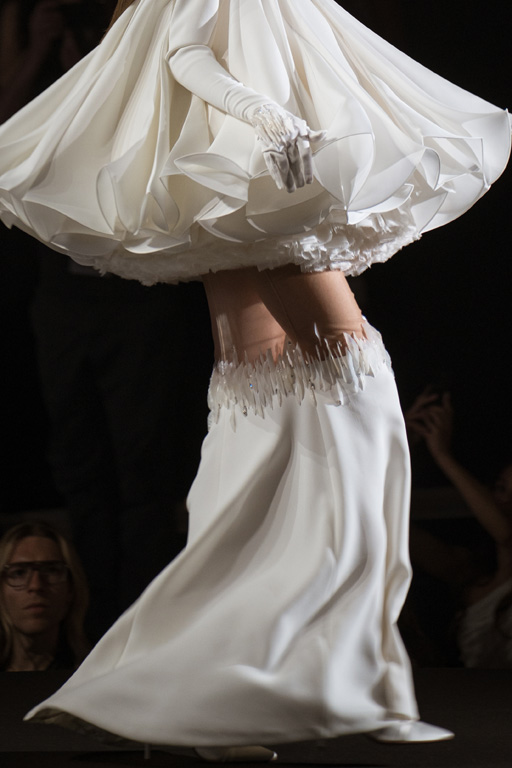
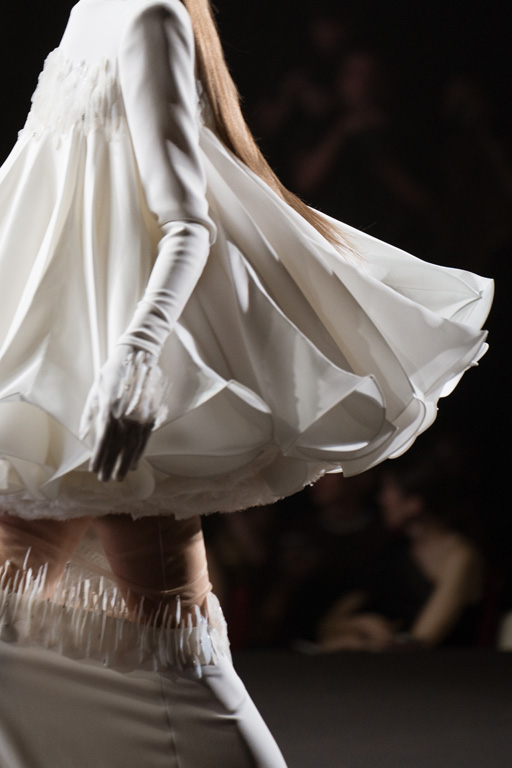
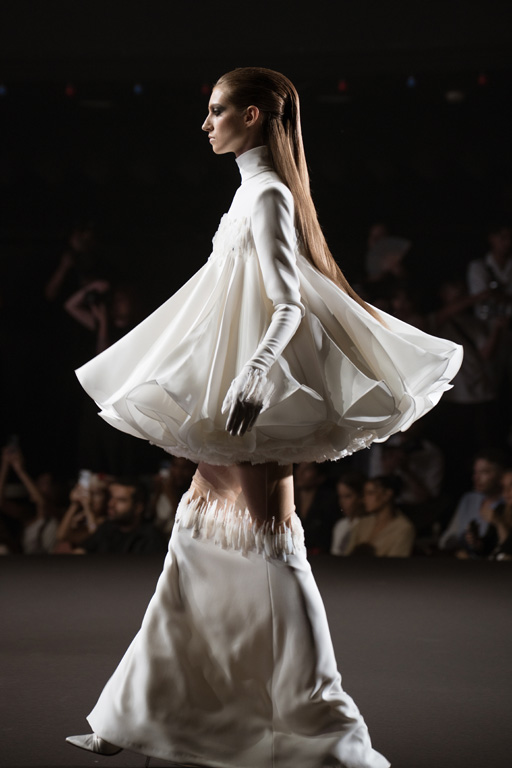
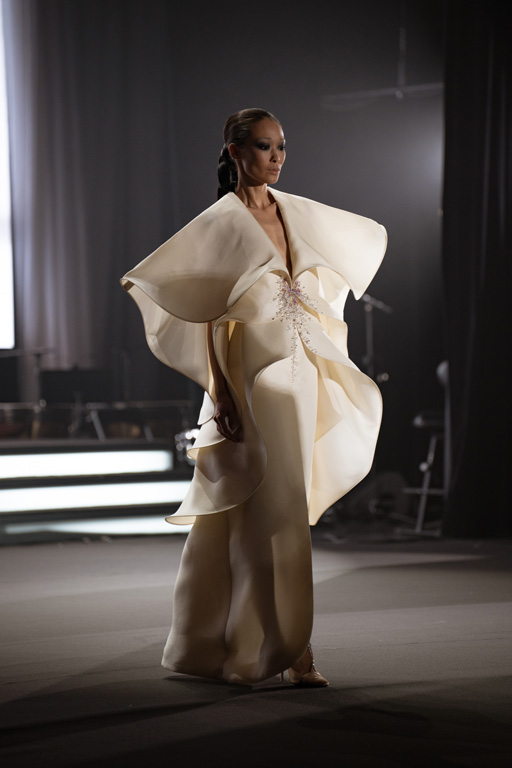
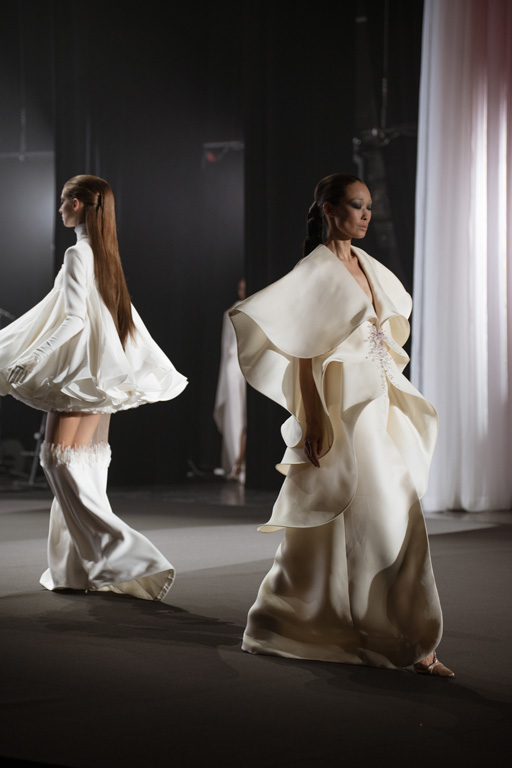
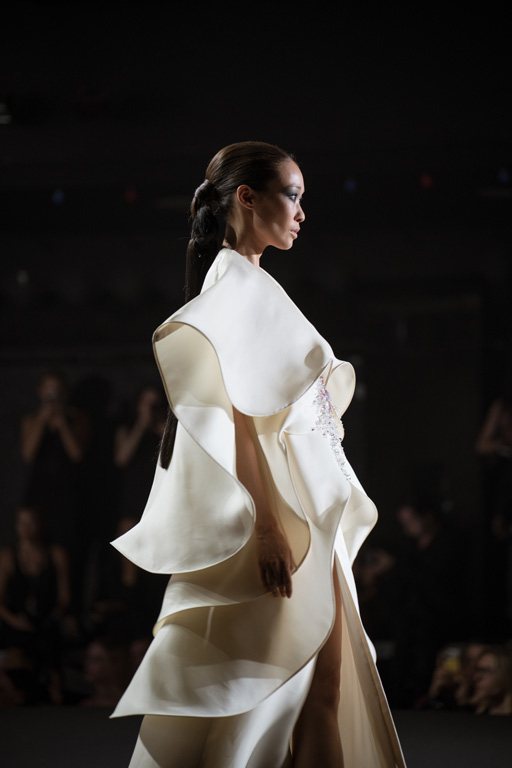
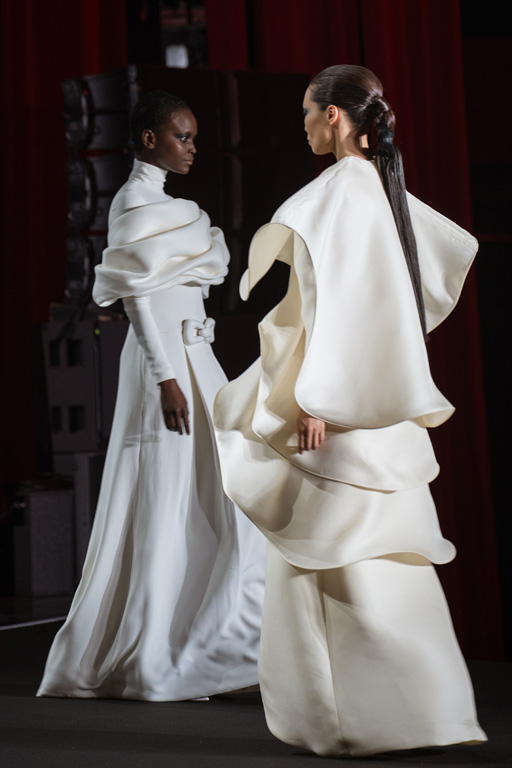
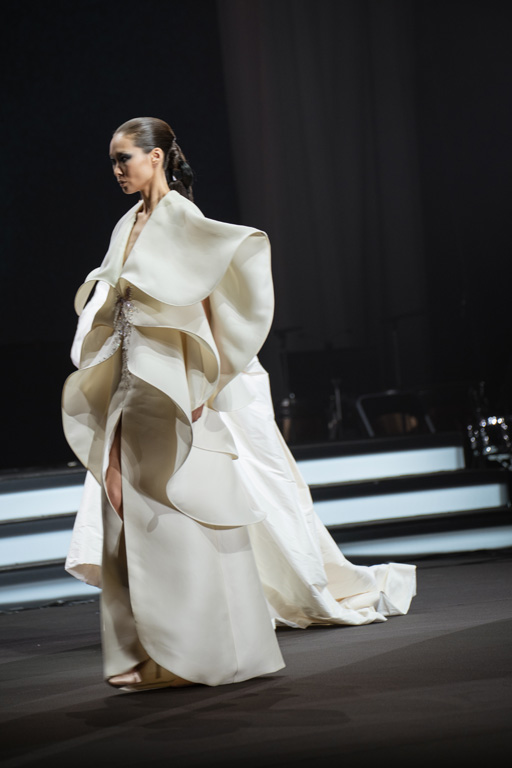
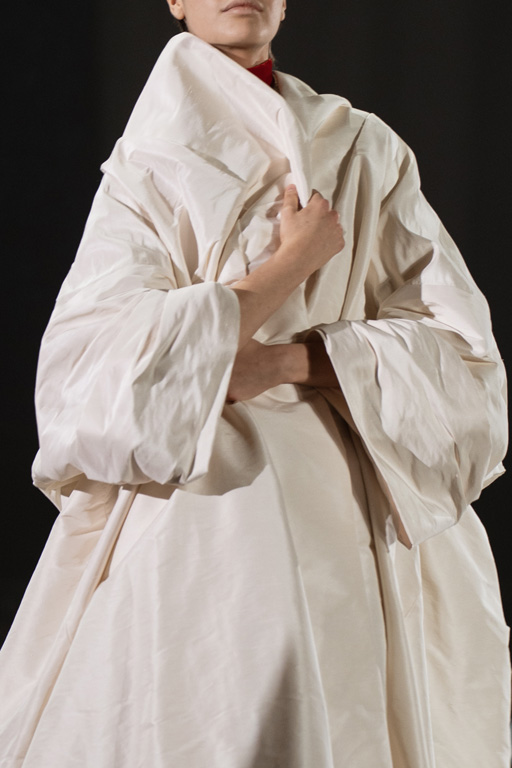
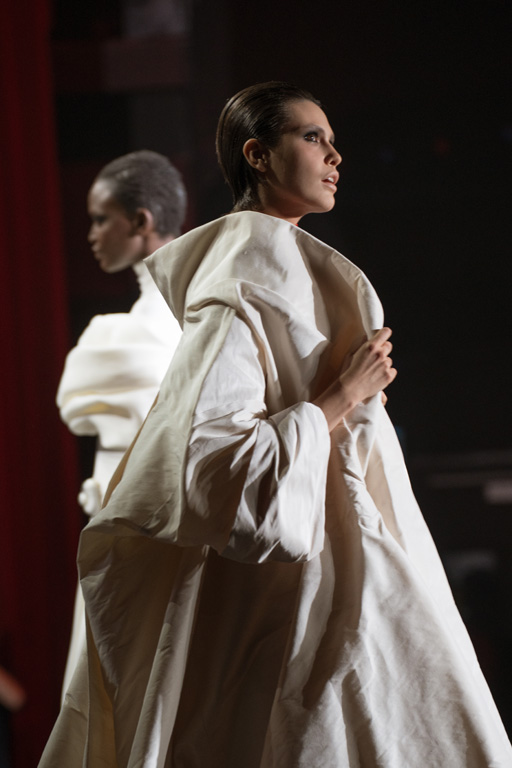
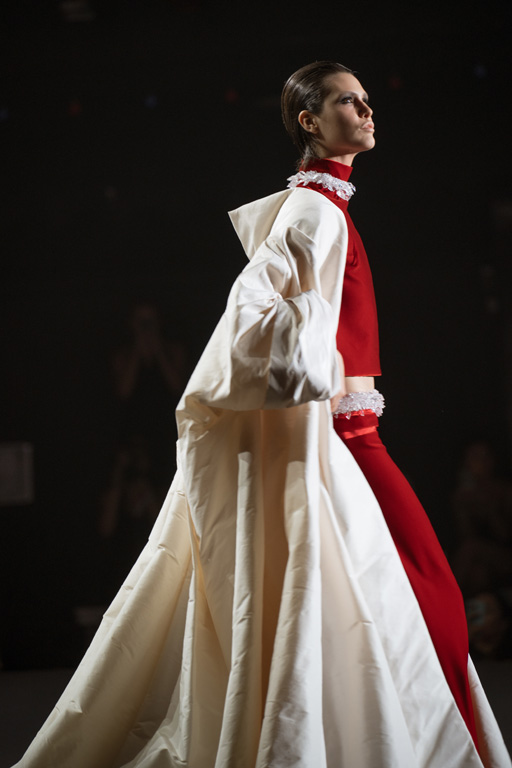
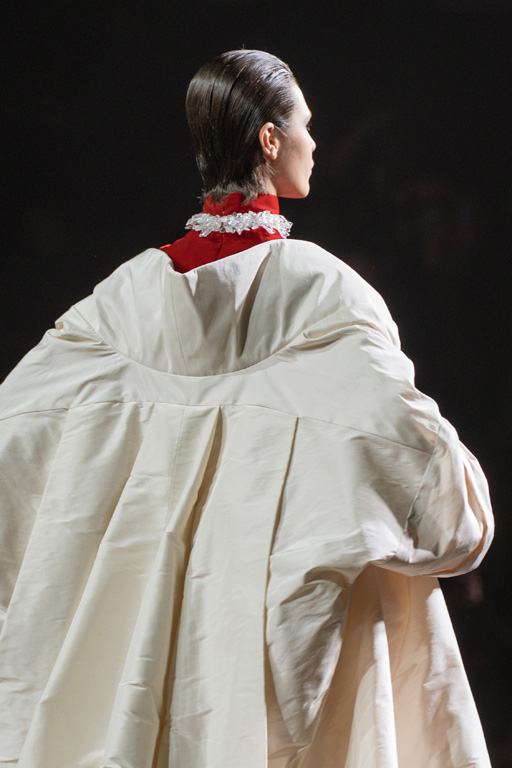
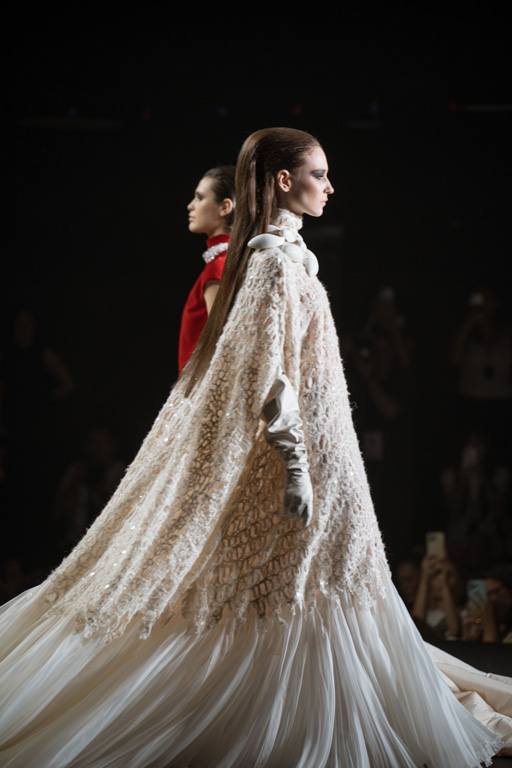
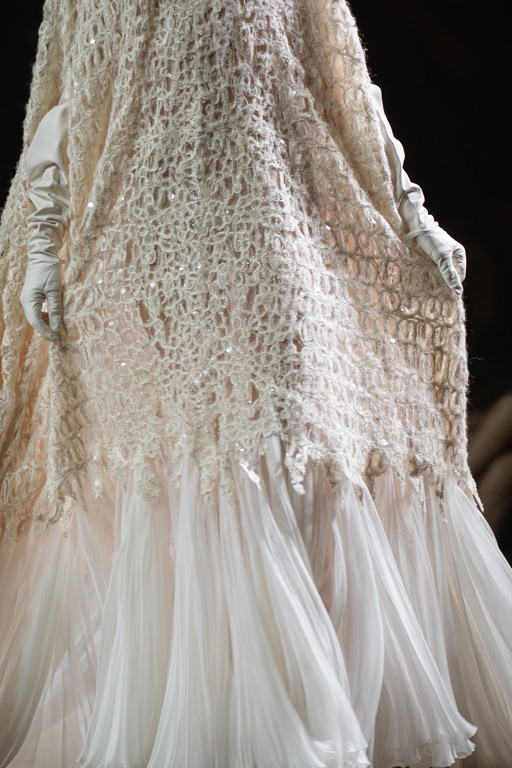
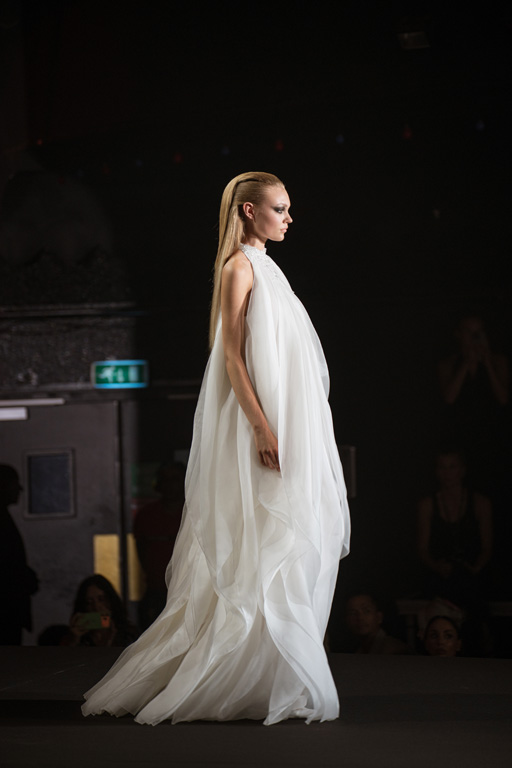
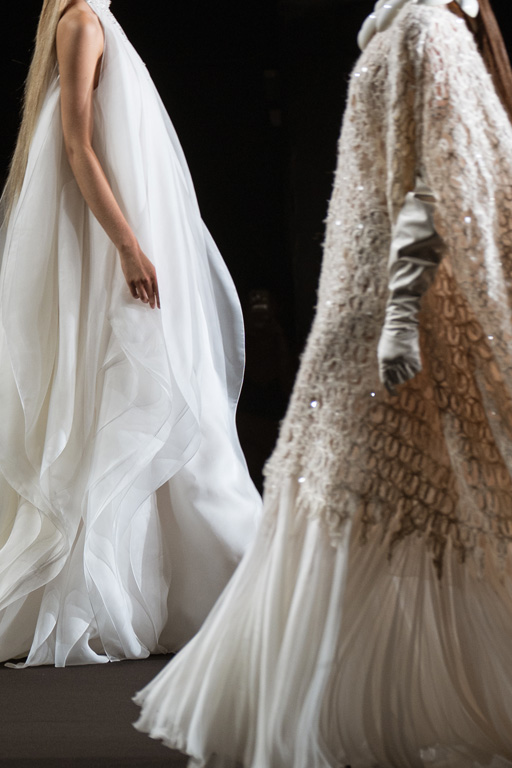
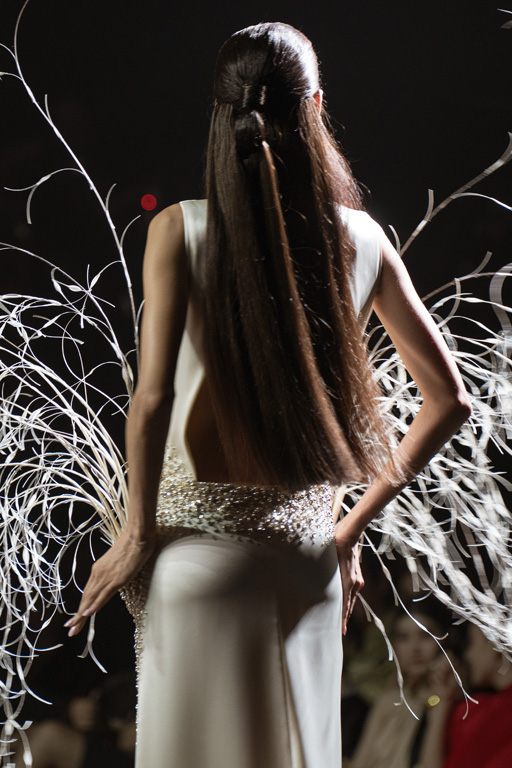
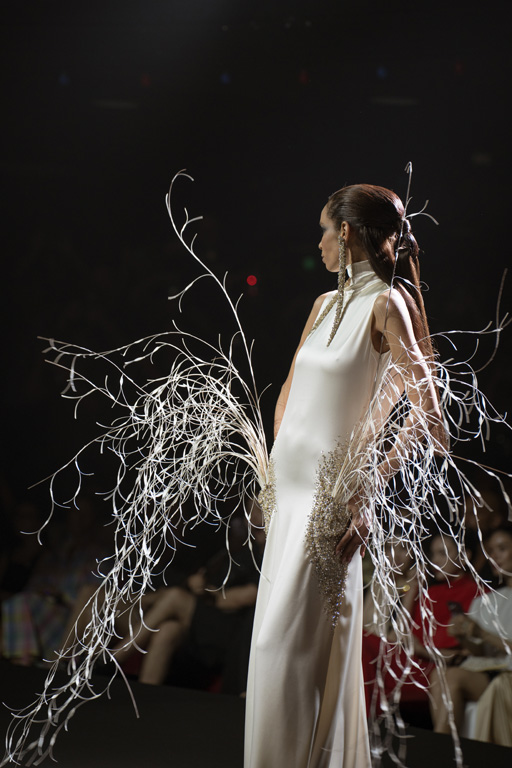
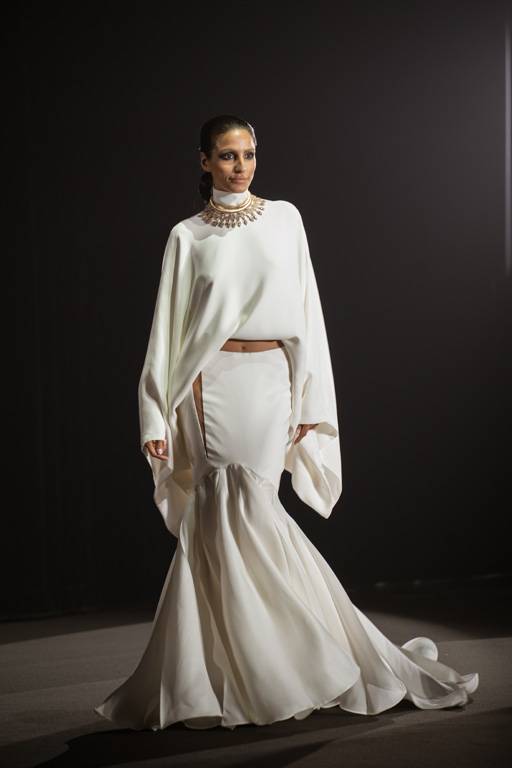
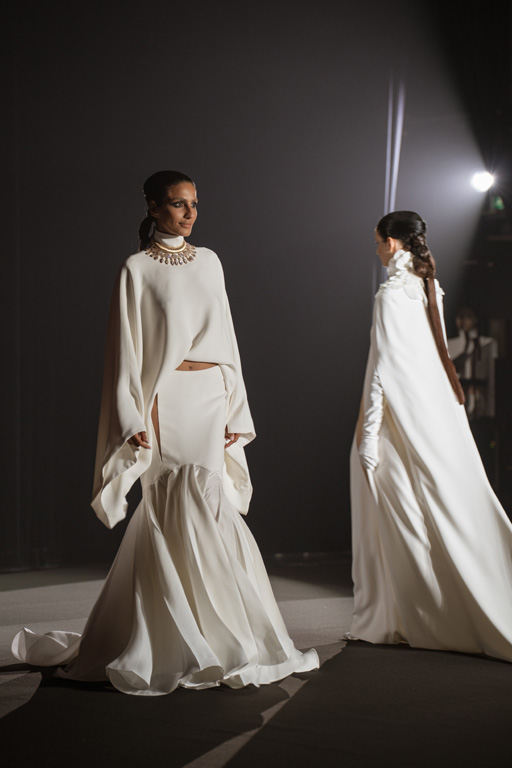
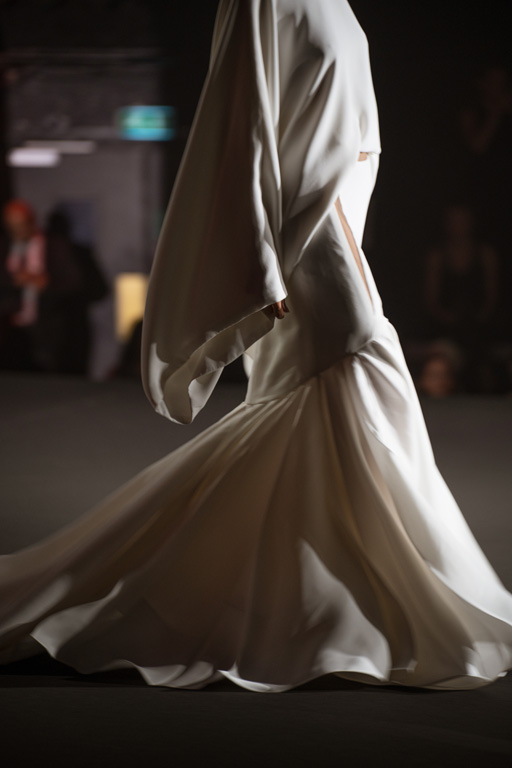
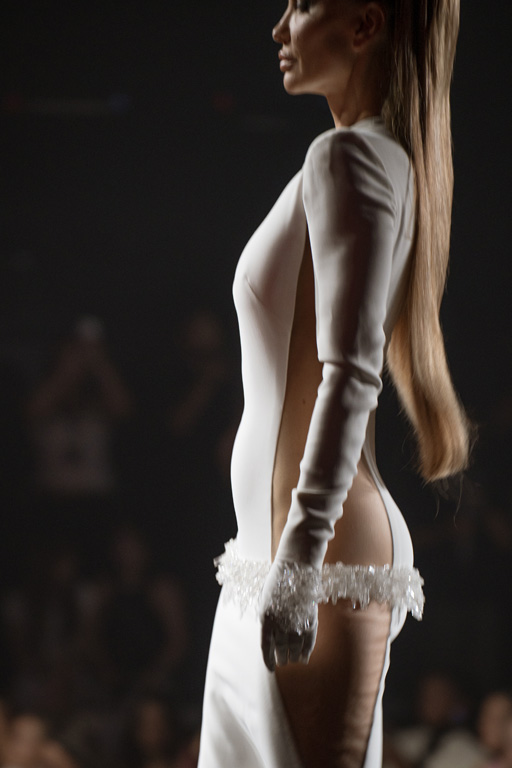
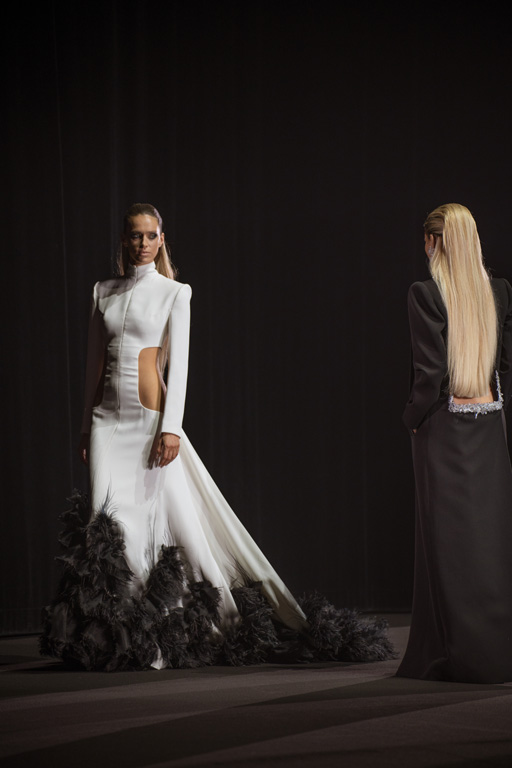
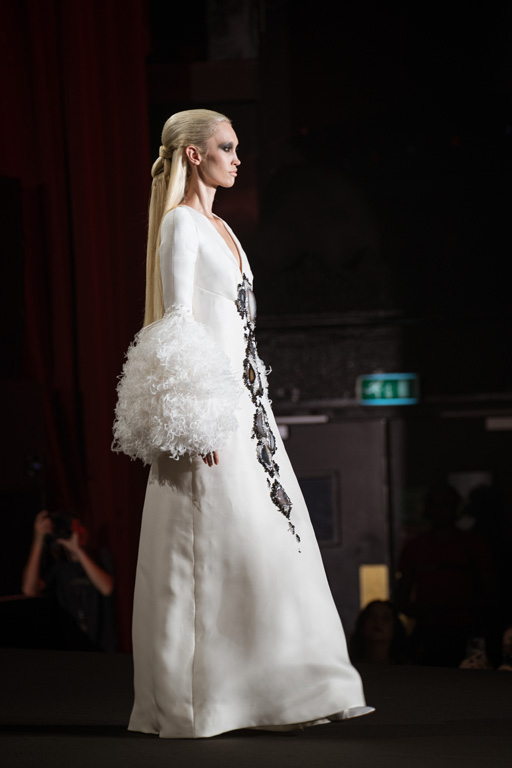
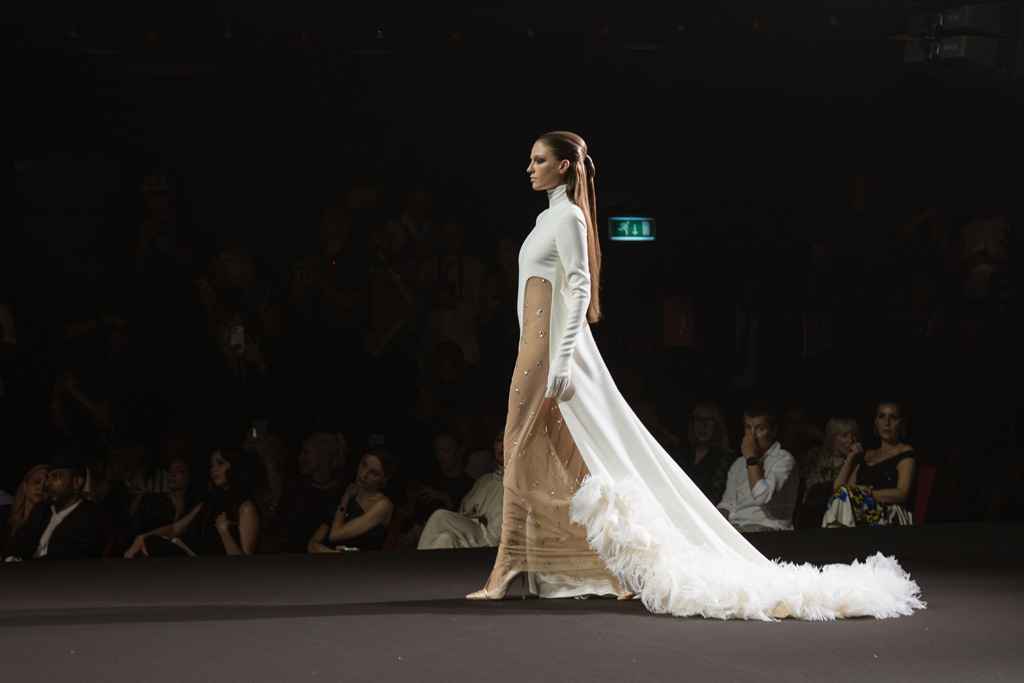
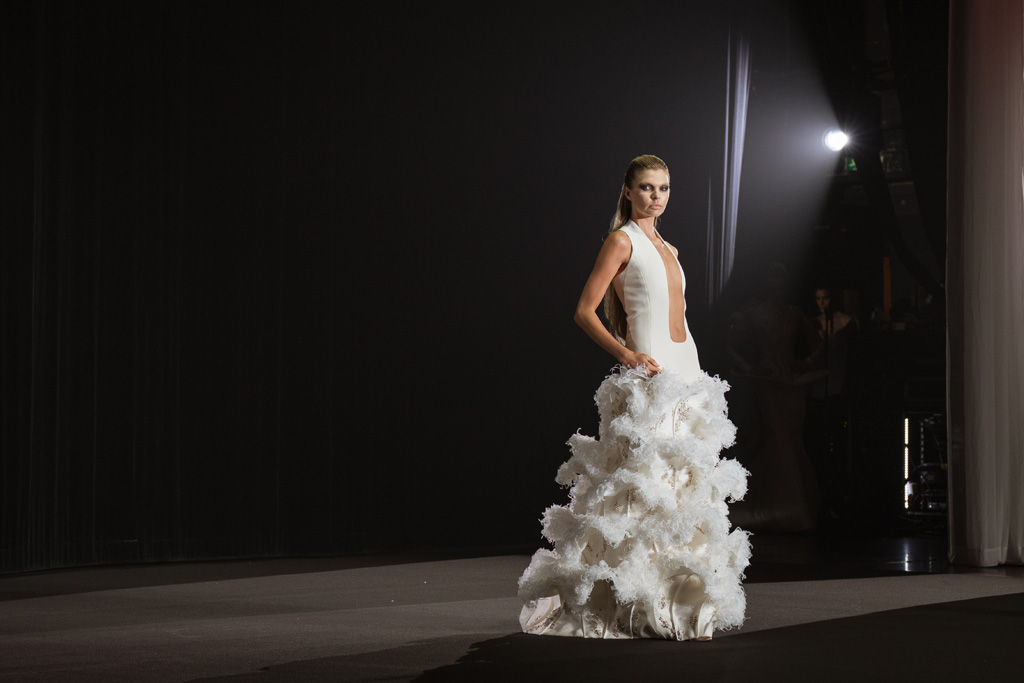
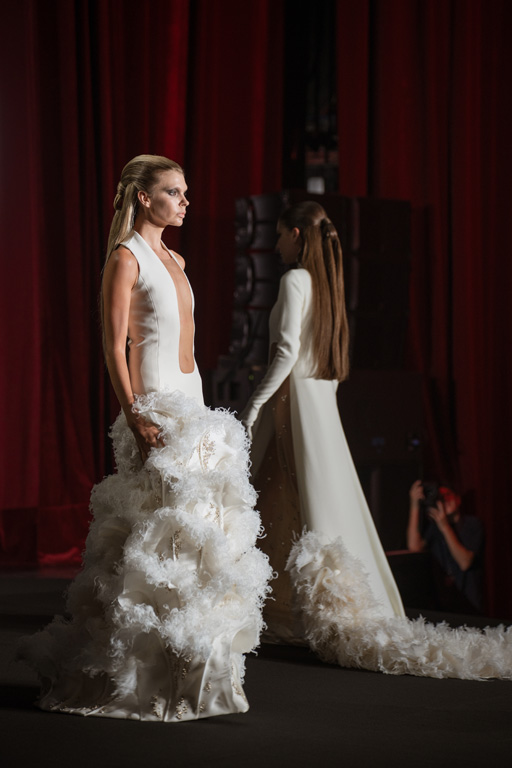
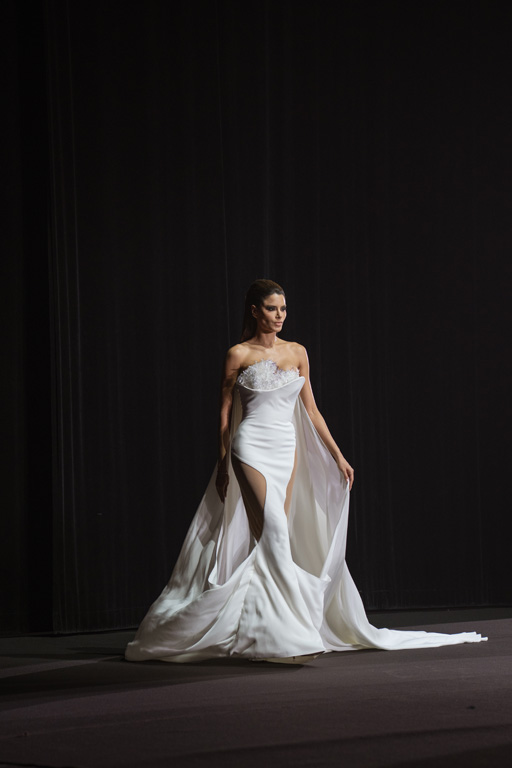
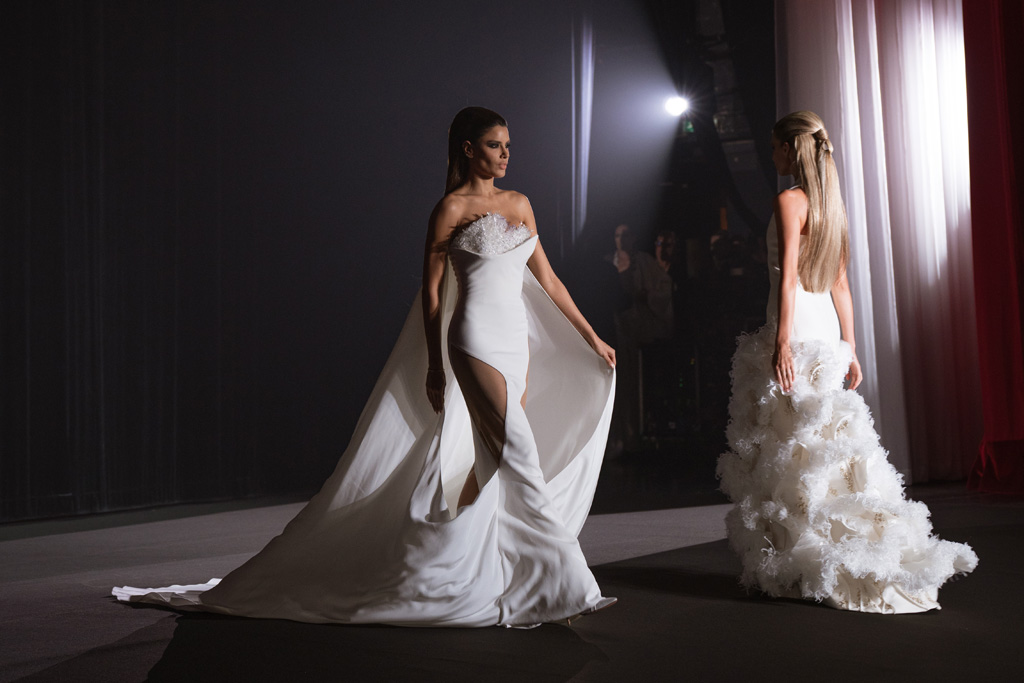
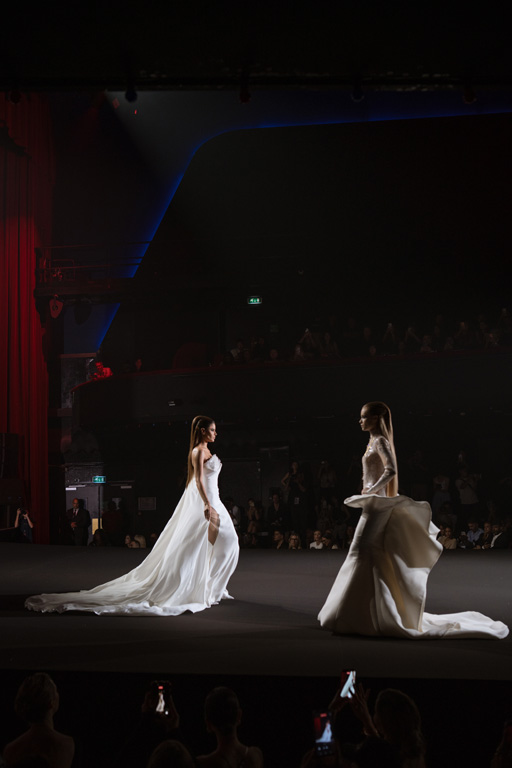
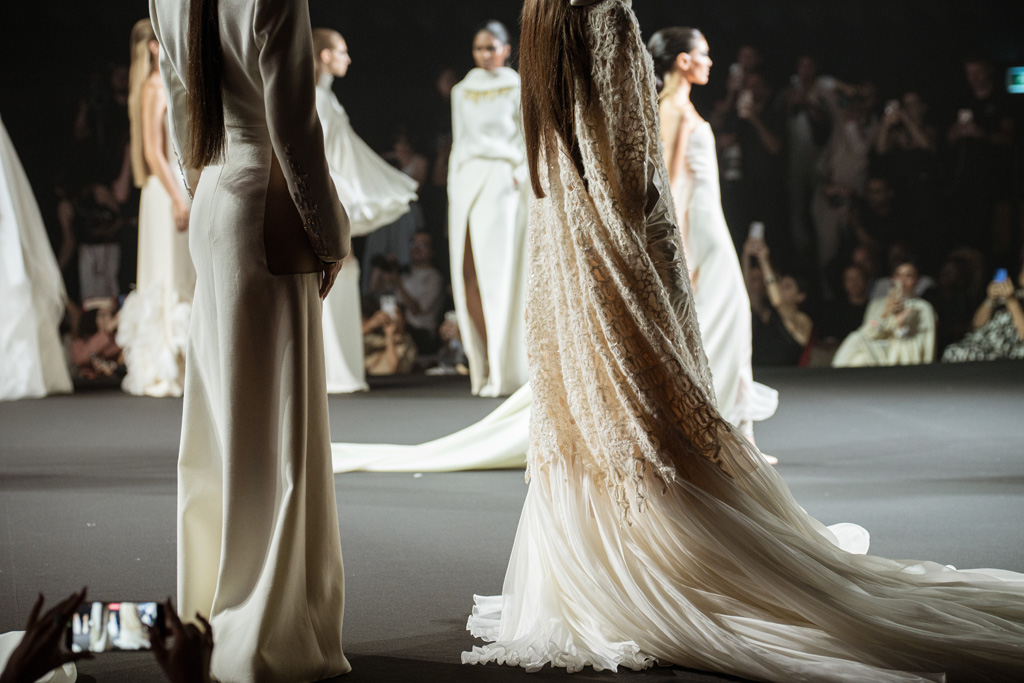
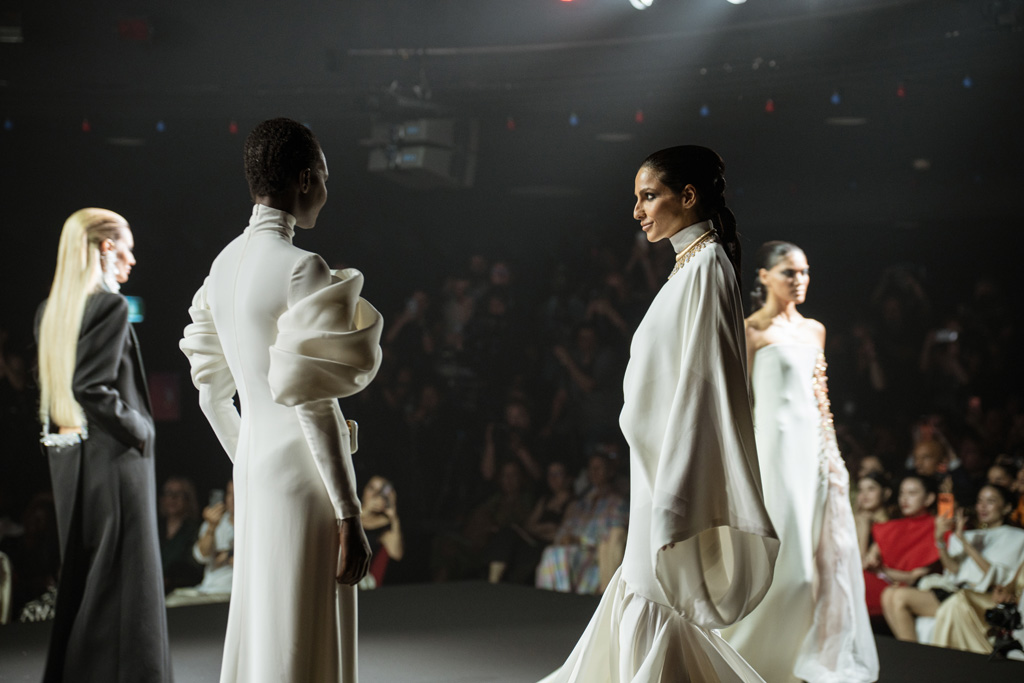
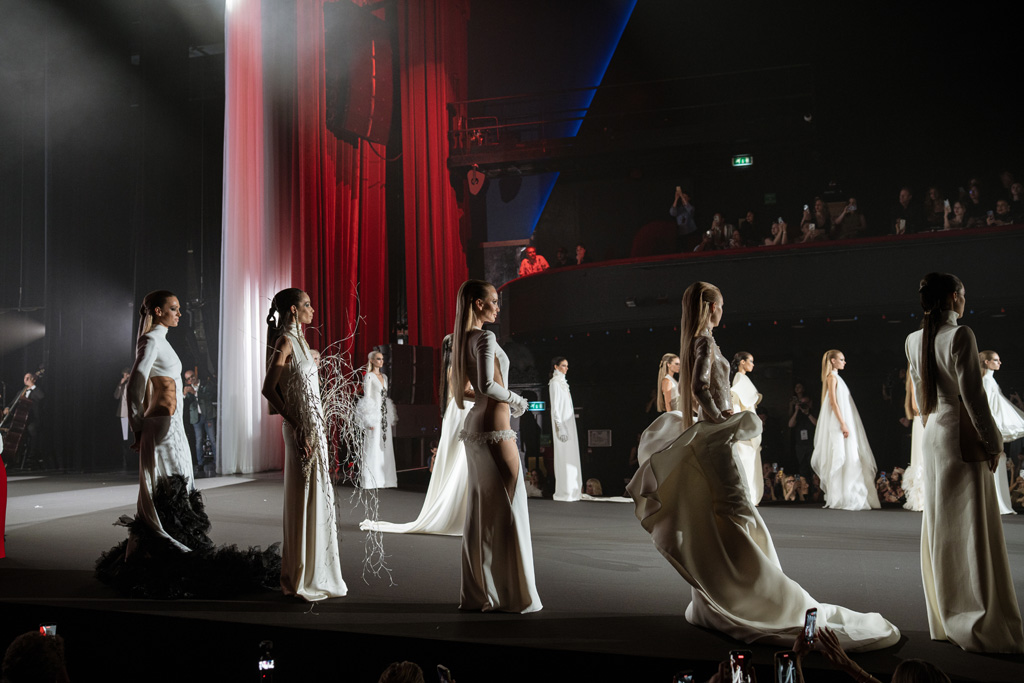
White dominates the collection’s opening like an unwritten page. Crêpe, gazar, chiffon, organza, and satin compose an almost immaterial landscape, animated by air, light, and movement. Volumes seem suspended between appearance and disappearance, dresses become breaths, capes become presences. This is couture as confession, where the silhouette exists not to mask but to reveal.
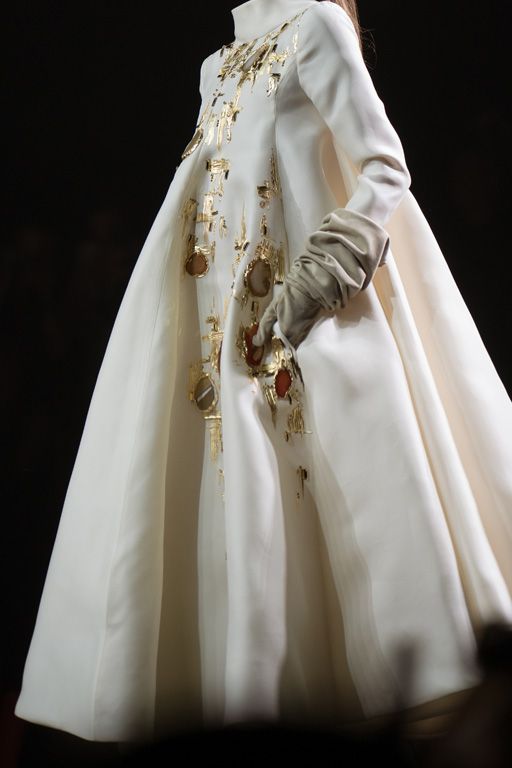
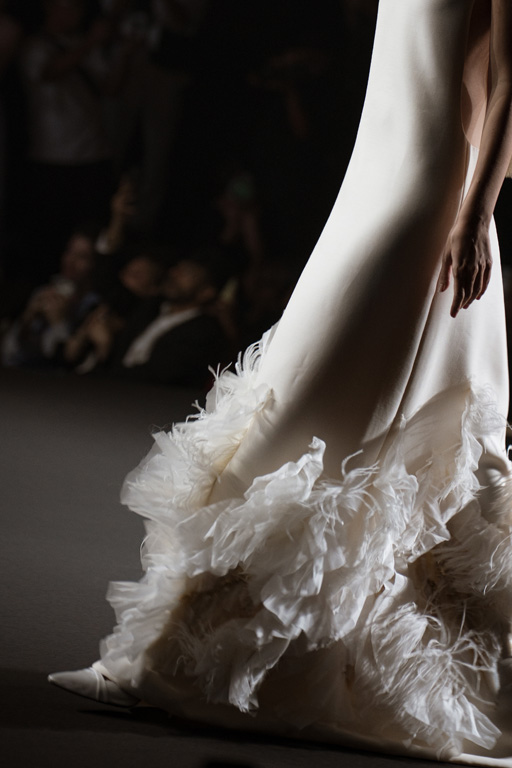
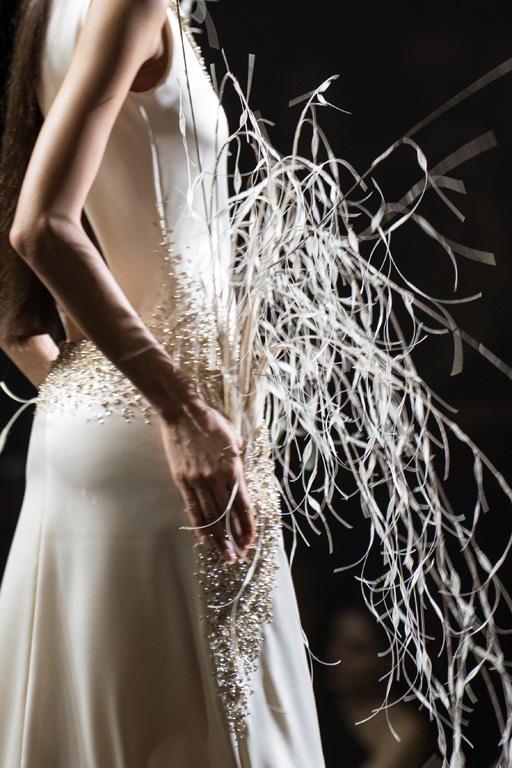
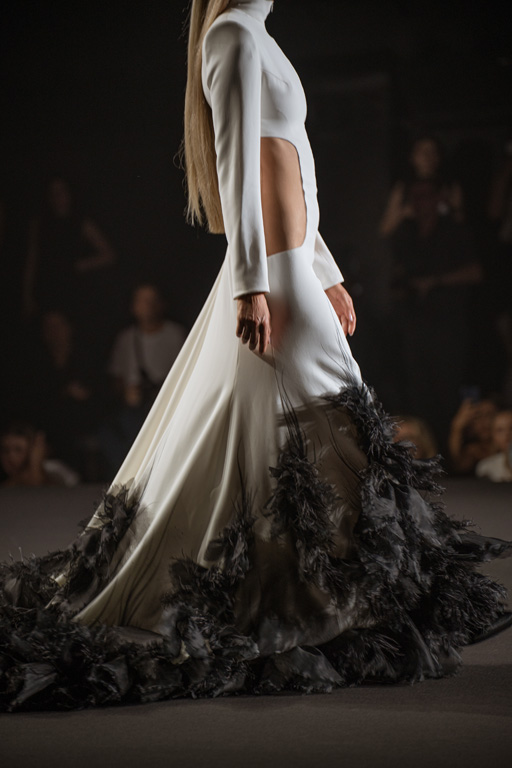
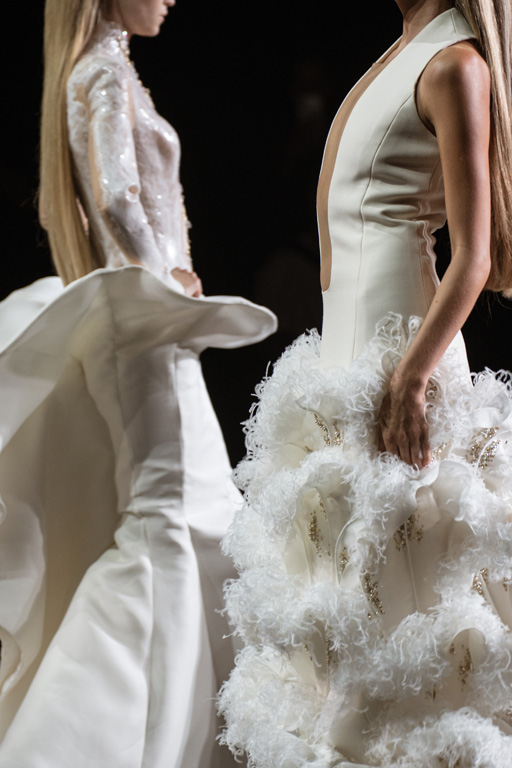
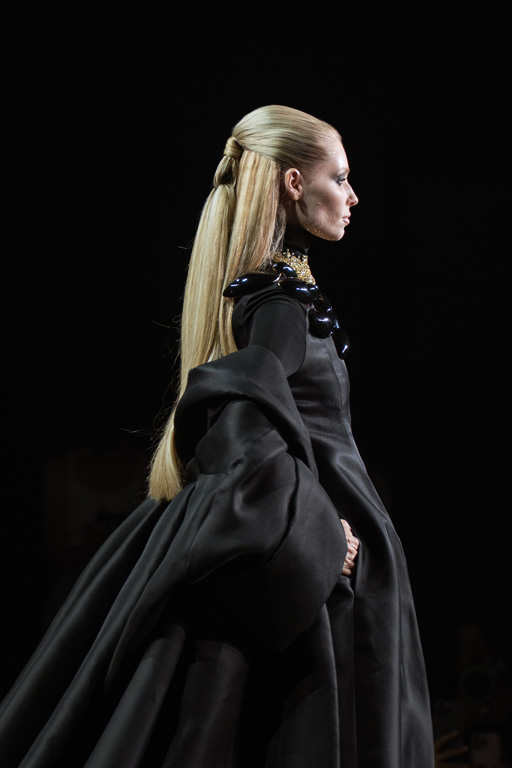
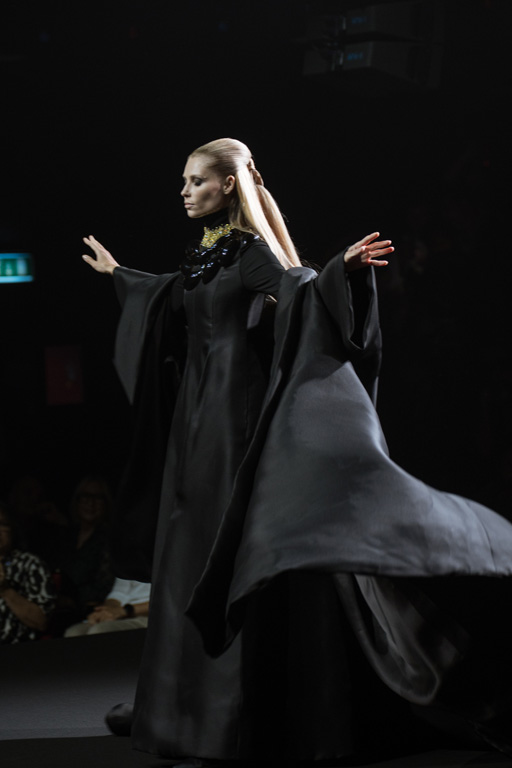
Stéphane Rolland‘s signature architectural precision remains unmistakable: bold shoulders, vertical lines that elongate the body, dramatic capes, and monumental proportions. Yet here, the geometry serves emotion. A maxi trapeze dress in silk gazar embroidered with terracotta agate and gold silicone introduces warmth into the monochrome narrative. A “Waves” dress in white silk gazar embroidered with silver and crystal turns movement into light. A bustier dress in white satin macramé features an overskirt of organza ruching and white ostrich feathers, capturing the interplay of control and release that defined Dalida’s performances.
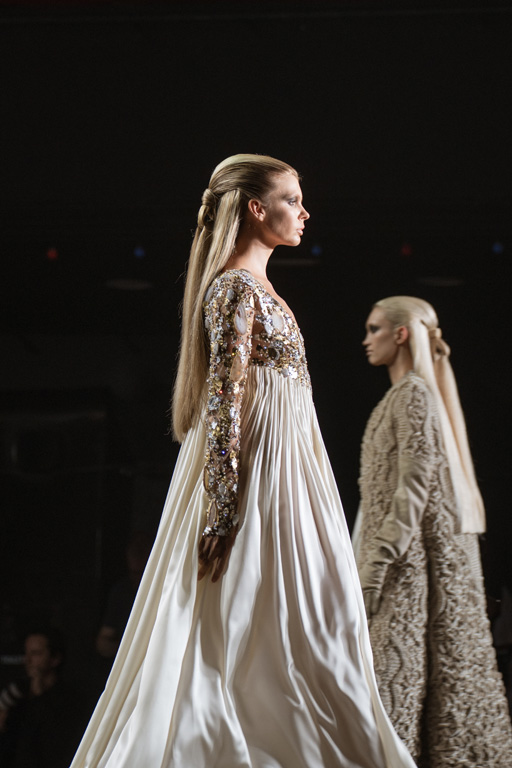
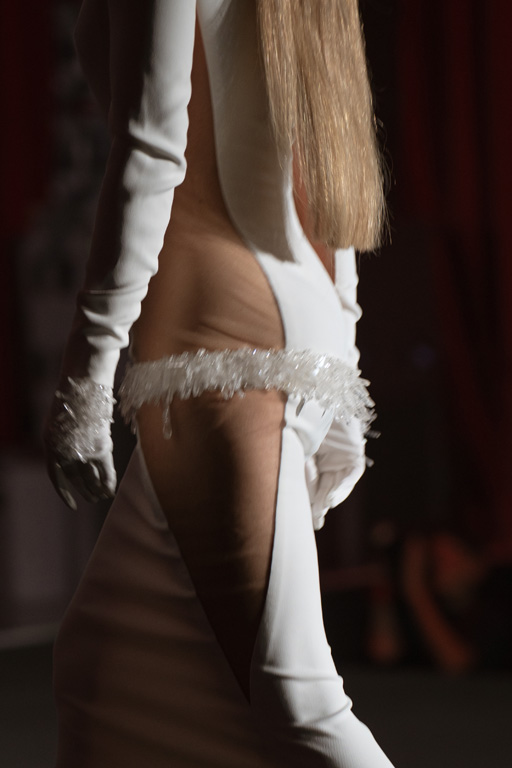
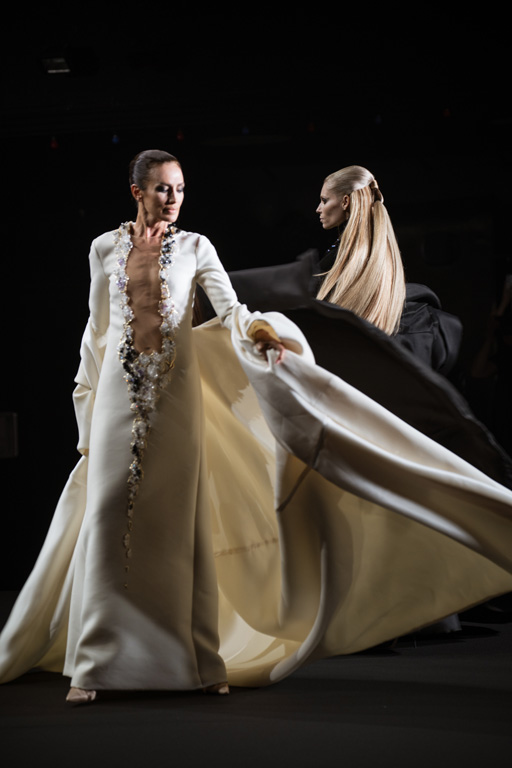
The embroideries tell their own story. Agates, crystals, diamonds, mother-of-pearl, porcelain, and precious stones are never used as ornament alone, but as fragments of emotion. Every sparkle becomes a suspended note. Every reflection evokes a phrase that continues to vibrate long after the music has faded.
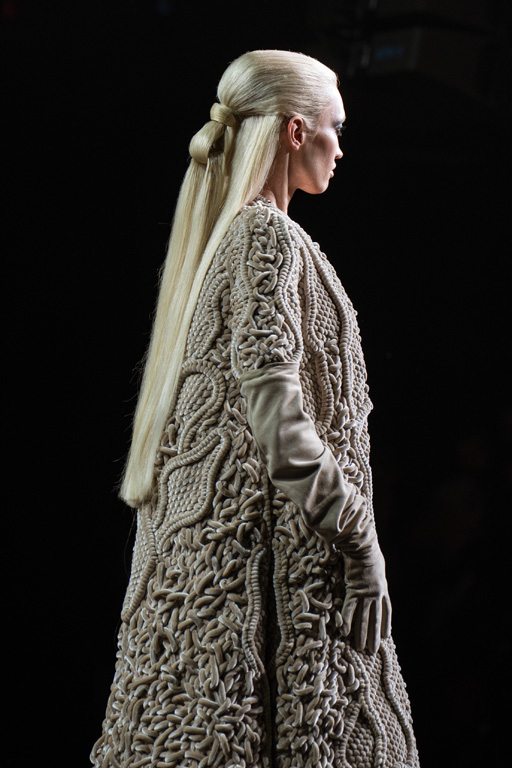
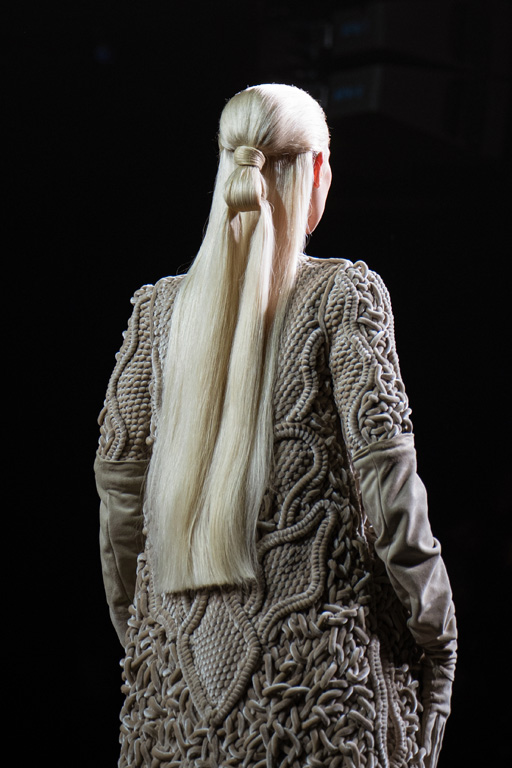
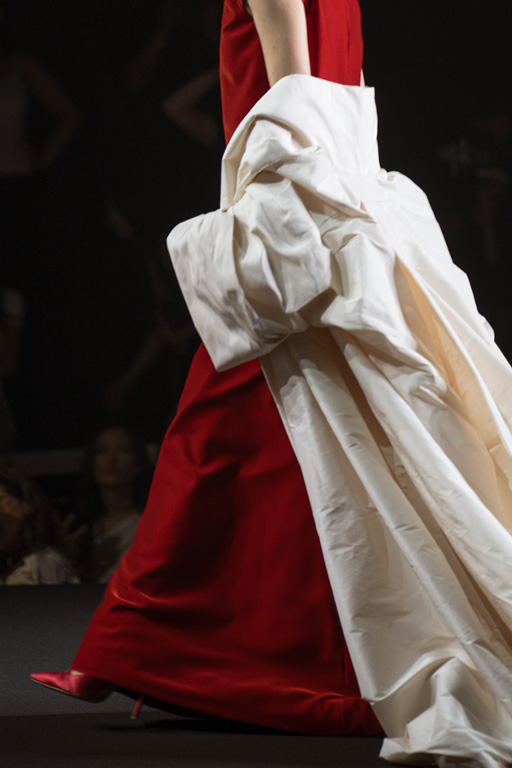
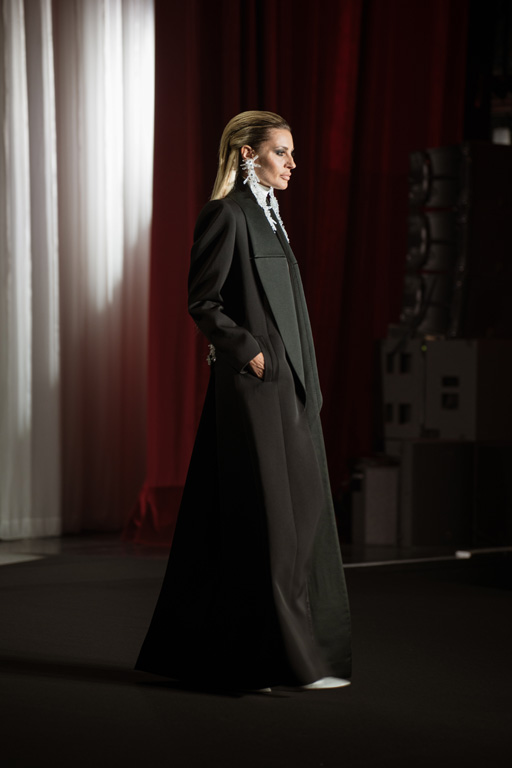
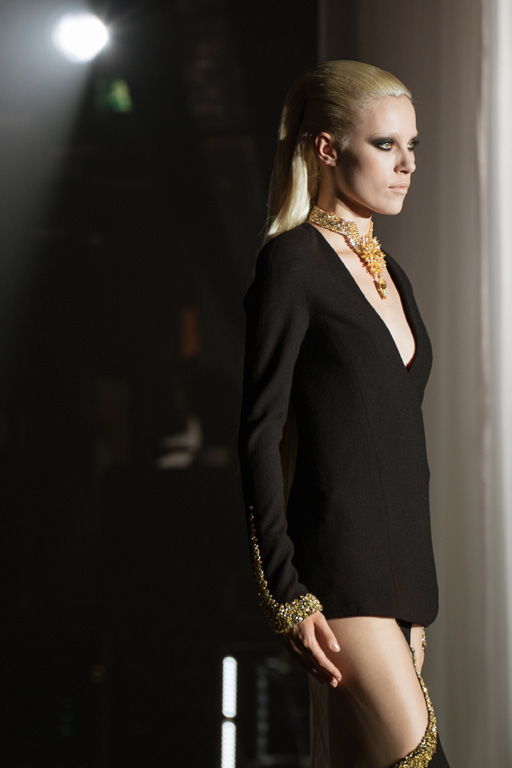
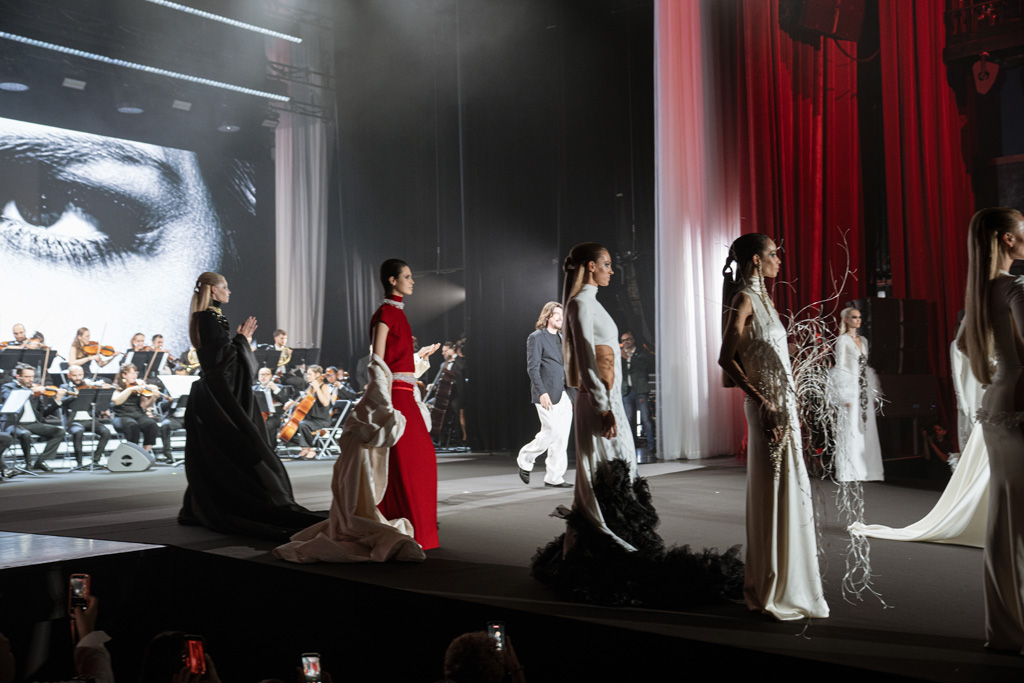
As the silhouettes evolve like chapters in a recital, the palette deepens. Red enters through “Olympia” velvet, followed by intense blacks and flashes of silver. A long backless tuxedo jacket in black grain de poudre, embroidered with rock crystal, sharpens the mood. Openwork tailored dresses and feathered constructions bring theatrical darkness to the final passages. The shift feels deliberate, like a song gaining intensity while maintaining its restraint.
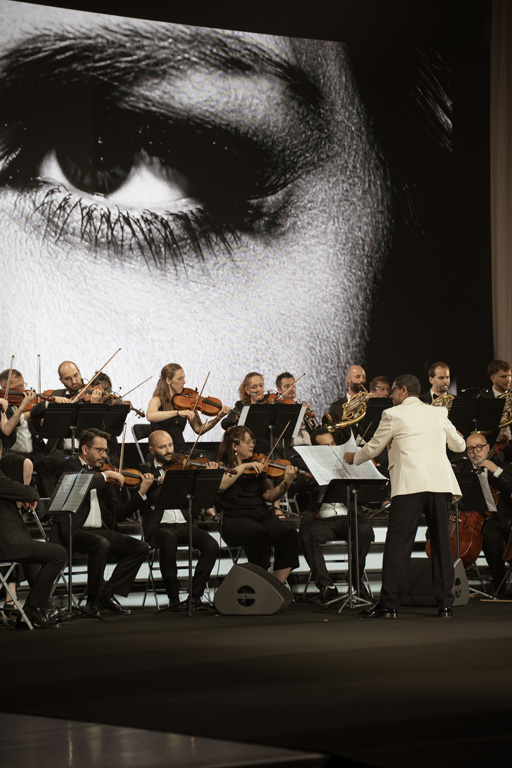
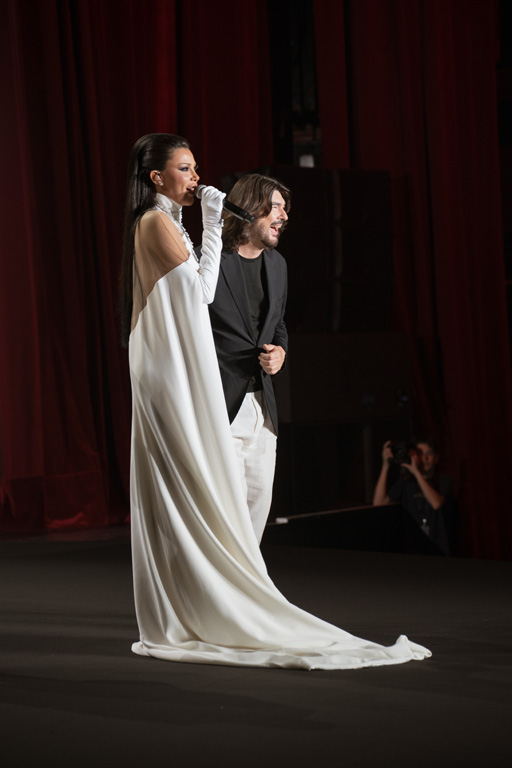
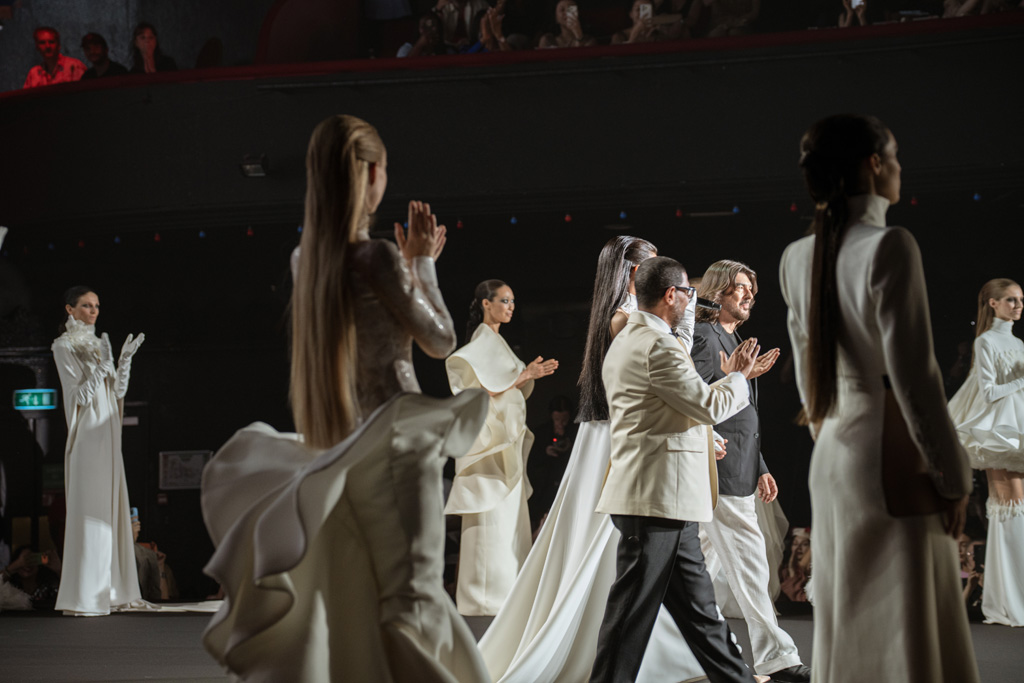
The evening reached its emotional peak with a surprise performance by Tunisian singer Oumaima Taleb, accompanied by a live orchestra led by Egyptian conductor Hany Farahat. The program featured an evocative selection of songs, including Léo Ferré’s “Avec le temps,” Francis Lai’s “Pour qui, pourquoi,” Michel Legrand’s “Une vie,” and Jacques Brel’s “Ne me quitte pas” performed in its Italian adaptation. Oumaima Taleb herself delivered two moving interpretations: “Quand on n’a que l’amour” and “Helwa Ya Baladi.” One particularly poignant moment came when Dalida’s own brother, Orlando, was present in the audience: a discreet yet essential presence who had understood what was left unsaid, supported without ever overpowering, and remained the unconditional love that accompanied her throughout her life. Before Rolland himself was handed the microphone, the tribute felt complete: a family gathered to honor a voice that never truly left. Dalida’s legacy, the designer reminded us, continues to unite and transcend generations, her voice, elegance, and spirit rooted in our cultural imagination, forever shining.
Dalida shared an extraordinary relationship with couture, understanding instinctively the power of clothing not as status but as an extension of emotion. The great couturiers who dressed her enhanced her presence without ever overshadowing it. This idea remains at the heart of Rolland’s work: creating garments that reveal the person rather than erase them.
“We celebrate her,” Rolland said of the collection. “The collection is almost all white, very pure, very sleek, very clean, extremely couture.”
Through these 33 silhouettes, Rolland does not seek to recreate an era. He seeks to recover a feeling, the sensation of an artist stepping alone onto a stage and filling the space with an intensity beyond words. In a world saturated with instant images, Dalida remains a figure of timelessness. Her elegance, depth, and humanity continue to converse with the present, reminding us that modernity does not reside in speed, but in the ability to touch something universal.